



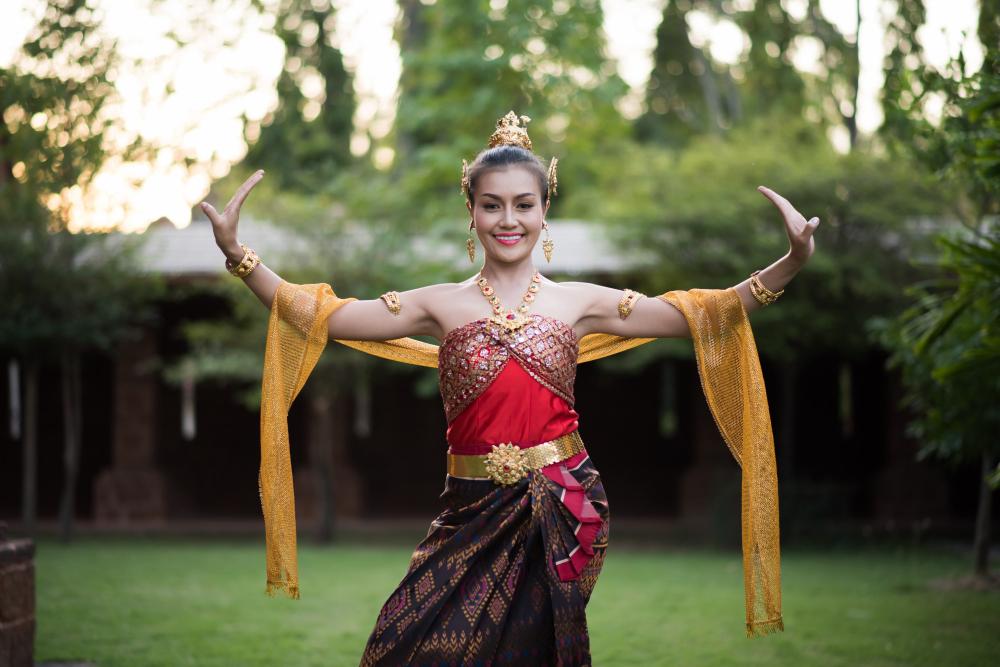
Serimpi Dance is a classical dance originating from the royal palaces of Yogyakarta and Surakarta. This dance is usually performed by four female dancers, symbolizing the four elements of nature: fire, air, water, and earth. The movements in Serimpi Dance are characterized by grace and elegance, reflecting the politeness and refined demeanor of Javanese women.
Attire Worn
Serimpi dancers wear traditional attire consisting of:
- Kain Seredan: A long fabric wrapped as a lower garment.
- Sleeveless Top: A sleeveless upper garment that highlights elegance.
- Headpiece: A traditional Javanese hair bun adorned with ceplok flowers and cassowary feathers.
- Keris (Dagger): A traditional weapon tucked in the front, symbolizing readiness and vigilance.
This attire not only enhances the visual beauty but also carries deep symbolic meaning.
Musical Accompaniment
Serimpi Dance is accompanied by traditional gamelan music, which consists of several instruments, including:
- Gendhing Sabrangan: Played when dancers enter the stage.
- Gendhing Tengahan or Gendhing Ageng: Accompanying the main part of the dance.
- Ayak-ayak and Srebegan: Accompanying battle scenes within the performance.
The combination of these instruments creates a harmonious rhythm, perfectly complementing the dancers' movements.
Philosophical Meaning
Serimpi Dance symbolizes the eternal battle between good and evil, right and wrong, as well as human reason and desires. The movements in this dance reflect these values, with the dancers performing in unity and harmony. Additionally, the dance portrays the beauty of nature and the daily life of the local community, teaching simplicity and purity in life.