




Did you know? Along the northern coast of Java, there is Batik Lasem, one of the most distinctive traditional batiks of the Indonesian archipelago. It is known for its bold colors, meaningful patterns, and long history that shapes its unique identity. Batik Lasem is not just a piece of cloth, but also reflects the blend of different cultures that once existed in the coastal region.
The strong character of Batik Lasem makes it often regarded as one of the most unique batiks in Java. Its uniqueness comes from the combination of traditions, cultures, and historical journeys that are closely connected. Let’s take a closer look at the origins of Batik Lasem, its history, and the distinctive motifs that make it a valuable cultural heritage.
What Is Batik Lasem?
Batik Lasem is a traditional batik that originates from the Lasem area, a coastal district in Rembang Regency, Central Java. This batik is known for receiving foreign cultural influences, especially Chinese influences, dating back centuries.
Because of this, Batik Lasem is also referred to as Batik Tiga Negeri (Three Nations Batik). This name refers to its production process, which reflects a blend of three cultures: Javanese, Chinese, and European.
This cultural blend can be seen not only in its motifs and colors, but also in its production techniques and the values embedded in each piece of cloth.
The most distinctive feature of Batik Lasem is its signature deep red color, often called “chicken blood red,” along with its richly symbolic and philosophical motifs.
The History of Batik Lasem
The development of Batik Lasem is closely linked to the history of the Lasem area in the 19th to early 20th century. During that time, Lasem was known as an important port on the northern coast of Java and became a stopping point for Chinese communities arriving from southern China. The interaction between these newcomers and the local people helped shape the unique character of Batik Lasem.
The distinctive patterns found in this Batik Tiga Negeri were actually introduced much earlier, around the 15th century, by Putri Campa, the wife of Bi Nang Un, who was part of Admiral Cheng Ho’s expedition.
Batik Lasem reached its peak around the 1860s, when many Chinese entrepreneurs established batik businesses. However, over time, the number of producers gradually declined, making this batik a cultural heritage that is now increasingly rare and valuable.
Related Article: Javanese Batik: A World-Recognized Heritage of Nusantara
What Are the Motifs of Batik Lasem?
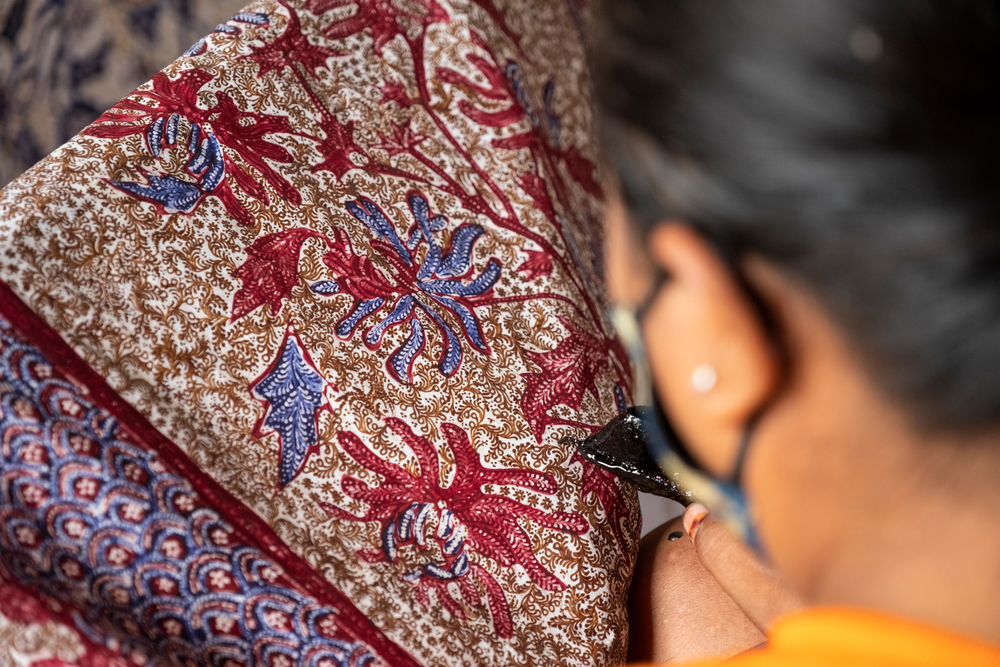
Batik Lasem motifs are inspired by nature, such as mountains, plants, and animals, which symbolize prosperity, fertility, and harmony in life. The gunung ringgit (mountain) or scale like pattern is often interpreted as a symbol of wealth and continuity.
In addition, strong Chinese cultural influences can be seen in motifs such as dragons, phoenixes, butterflies, and various floral ornaments, which represent loyalty, courage, and hopes for a balanced life.
Visit Batik Houses to Experience Batik Lasem

To this day, several batik houses in Lasem continue to preserve the authentic tradition of Batik Tiga Negeri. Here are some of them:
1. Nyah Kiok Batik House
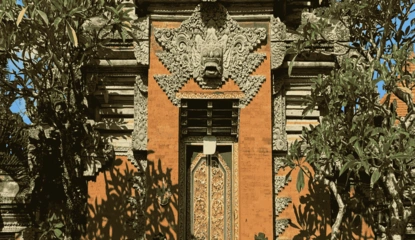
Nyah Kiok Batik House has been in operation since the early 20th century and is housed in a Chinese-Indies–style building. Today, the business is carried on by the next generation, with only seven batik artisans remaining—fondly known as the “Seven Angels of Nyah Kiok.” One of its most remarkable features is the technique: artisans apply wax directly using a canting, without preliminary pencil sketches.
Signature motifs from this batik house include gunung ringgit, symbolizing prosperity, and butterfly motifs representing loyalty, integrity, and simplicity.
Address: Jalan Karangturi Gg. 6, Karangturi, Lasem, Rembang, Central Java
2. Maranatha Batik House
Formerly known as Batik Ong, Maranatha Batik House remains committed to traditional production methods. The creation of Batik Tiga Negeri here involves a lengthy process, including fabric treatment that can take up to 30 days to ensure long-lasting and fade-resistant colors.
Its hallmark lies in the sequence of colors: red, followed by blue, and then yellow as well as the use of kereta kencana and gamelan fabrics. Popular motifs include tamarind leaves, lokcan, pasiran, esok sore, and gunung ringgit.
Address: Gg. 1 No.1, Mahbong, Karangturi, Kec. Lasem, Kabupaten Rembang, Jawa Tengah
3. Lumintu Batik House
Lumintu Batik House occupies a Chinese-Indies–style building estimated to be around 200 years old. After ceasing operations in 1977, it was revived in 2016. The house is particularly known for its kendoro kendiri motif, which features strong visual elements and symbolic meaning unique to Batik Lasem.
Address: Jalan Sumbergirang II No. 2, Lasem, Rembang, Central Java
4. Kidang Mas Batik House
Kidang Mas Batik House is currently managed by its sixth generation. Initially, batik was produced solely for personal use before growing into a commercial venture due to rising demand.
Like other batik houses in Lasem, it continues to rely on traditional techniques and natural dyes, red from mengkudu roots, blue from indigo leaves, and brown from woods such as mahogany, teger, and jambal.
Address: Babagan, Lasem, Rembang, Central Java
Related Article: 7 Enchanting Stories Behind Indonesia's Famous Batik
Interested in seeing the batik-making process firsthand and purchasing one yourself? Plan your journey with AI Plan Your Trip to get a personalized itinerary tailored to your interests, schedule, and pace of visiting the Batik Lasem centers.
You can also rely on MaiA for quick recommendations on batik houses, the best time to visit, and practical tips for exploring the coastal area of Rembang, making your journey even more enjoyable.