


Riau Province is known as one of the cultural centers of Malay civilization in Indonesia. Among its many treasured traditions, Riau Malay songket weaving stands out as a masterpiece of textile artistry. This traditional woven fabric is not only visually stunning but also rich in cultural symbolism that reflects the identity and dignity of Malay society.
Exquisite Motifs and Radiant Colors
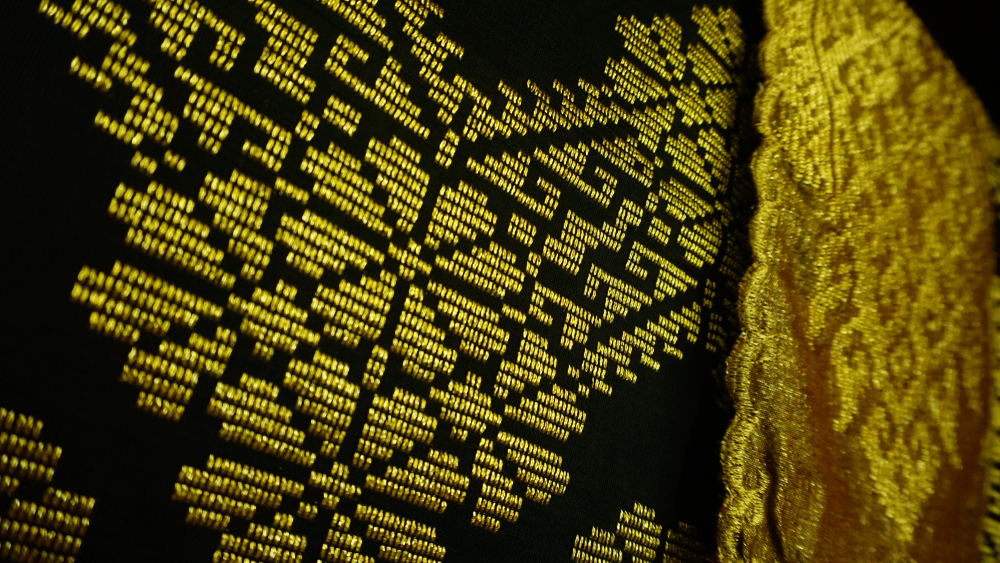
Riau songket is produced using traditional handlooms, where gold or silver threads are woven into the base cloth to create shimmering patterns.
Distinctive features include:
- Iconic Malay floral and geometric motifs, such as Bamboo Shoot (Pucuk Rebung), Clove Flower, Semangat Beralih, and Siku Keluang
- Elegant color palettes, including maroon, emerald green, royal blue, purple-gold, and deep black
- Meticulous craftsmanship, reflecting the patience and skill of the weavers
Each piece of songket can take days or even months to complete.
Cultural Meaning and Philosophy
Songket is more than just a textile; it represents:
- Honor and nobility
- Malay wisdom and tradition
- The cultural identity of the Riau Malay people
It is commonly used in:
- Traditional weddings
- Royal and ceremonial events
- Cultural performances
- Official attire for respected figures
Songket carries deep meaning and is often preserved as a family heirloom.
Songket in the Modern World
Today, songket is appreciated not only as traditional clothing but also as a modern creative medium. It is often used in:
- Contemporary fashion
- Ethnic bags and accessories
- Interior decoration
- Premium souvenirs
Its intricate motifs inspire designers worldwide.
Riau Malay Songket is a cultural treasure that embodies beauty, heritage, and philosophy. As a symbol of Malay identity, it deserves to be preserved and celebrated across generations.