





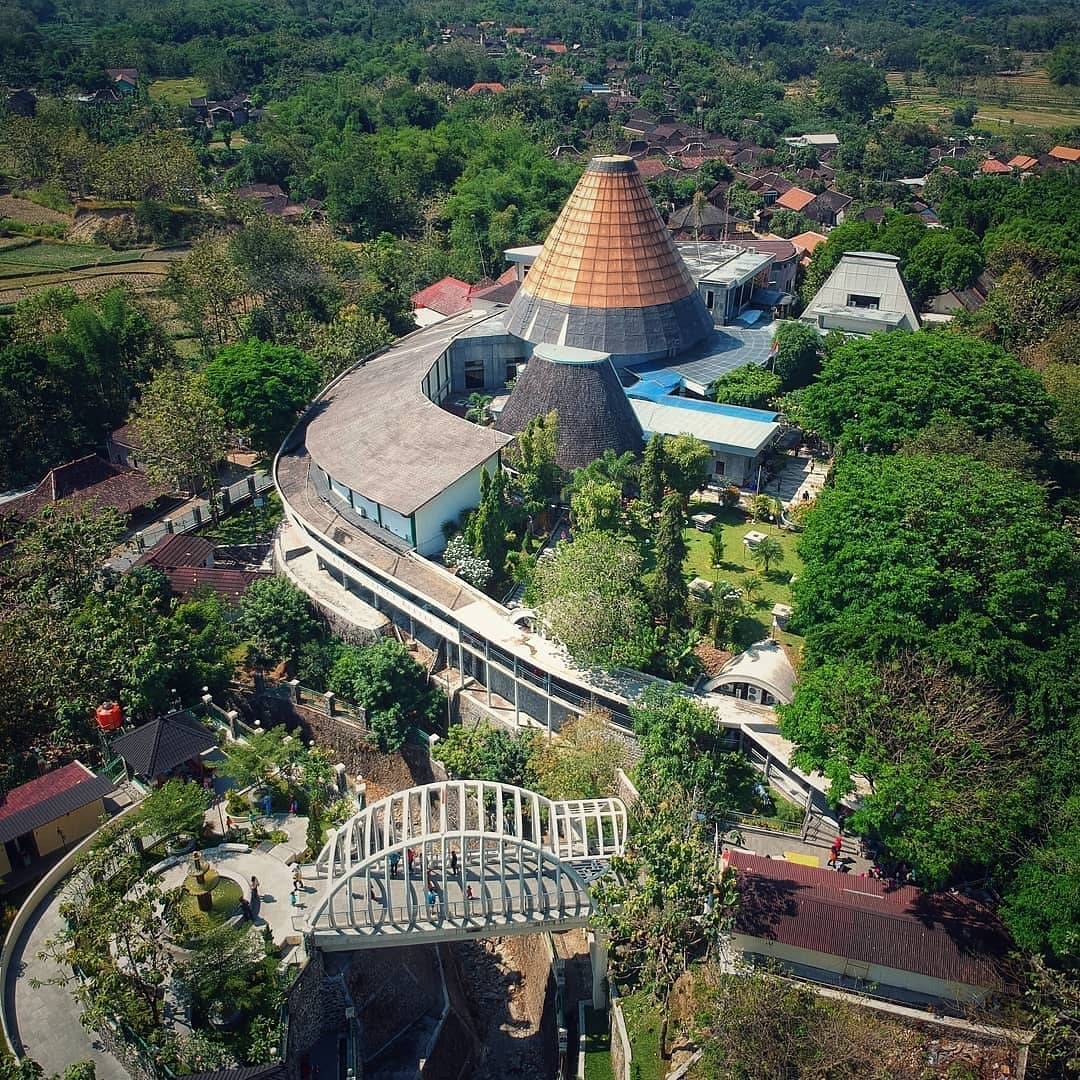
The Sangiran Early Man Museum (Krikilan Cluster) is a specialized museum in Sragen, Central Java, Indonesiadedicated to the preservation and presentation of early human fossils and prehistoric artifacts from the Sangiran Site. Officially registered with Indonesia’s Museum Registration system (National Museum Registration Number 33.14.K.01.0041), it forms part of the Indonesian Museum network and contributes significantly to global understanding of human evolution.
Located within the UNESCO World Heritage Site of Sangiran, the museum offers a scientific and educational experience for visitors interested in early hominid history, prehistoric environments, and the development of early human species in Asia.
What Is Sangiran Early Man Museum (Krikilan Cluster)?
The Sangiran Early Man Museum (Krikilan Cluster) is a specialized archeological museum designed to interpret the significance of the Sangiran Site, one of the most important hominid fossil sites in the world. Its exhibits showcase evidence of early human life, fossil remains, and geological context from the prehistoric past, offering insights into how early humans and their environments coexisted.
Museum Type & Classification
- Museum Category: Specialized Museum — focusing on prehistoric archaeology and human evolution.
- Museum Type: Type A — indicating a museum with extensive exhibition facilities and scientifically significant collections.
As a Type A museum, the Krikilan Cluster serves as an educational hub that supports research and public engagement with ancient human history.
History
The museum was established in 2011 and officially opened to the public on 19 October 2014 alongside other clusters within the Sangiran site. This initiative was part of the broader development plan of the Sangiran Early Man Site, which has been recognized as a National Cultural Heritage Site since 1977 and designated a UNESCO World Heritage Sitein 1996.
Management and Ownership
Owned by the Ministry of Culture of the Republic of Indonesia, the museum is managed by the Museum and Cultural Heritage unit under the Sangiran Early Man Site Preservation Authority. Its management includes maintenance of collections, exhibition planning, and public educational programs.
Museum Collections
The museum’s collections include approximately 39 fossil specimens and related artifacts that illustrate the prehistoric environment of the Sangiran region. These include early human remains, fauna fossils, and geological specimens that help reconstruct the environments where early hominids once lived.
The museum is divided into three main exhibit halls:
- “Wealth of the Sangiran Site” showcasing significant fossil discoveries.
- “Steps of Humanity” illustrating the evolutionary process of early human ancestors.
- “Golden Age of Homo erectus” focusing on life around 500,000 years ago through displays and dioramas.
Vision
The museum’s vision is to ensure the preservation of the Early Man Site to support sustainable development and community prosperity through public understanding of prehistoric heritage.
Mission
The museum’s mission includes:
- Enhancing protection of the Early Man Site as a valuable heritage.
- Developing the site’s potential and prehistoric values.
- Increasing public appreciation for prehistoric heritage.
- Promoting integrated and sustainable engagement with local, national, and global communities.
- Strengthening human resource development, partnerships, and responsible heritage management.