









Wae Rebo Traditional Village is a cultural gem in Flores that has earned global recognition, including the UNESCO Top Award of Excellence. Tucked away at an altitude of 1,100 meters above sea level, this tourism village offers an authentic adventure through the lush Todo Forest.
The natural beauty of this village blends harmoniously with its well-preserved traditions, creating a magical atmosphere for anyone willing to travel far to experience its tranquility and witness its breathtaking scenery.
Exploring Wae Rebo also serves as a perfect digital detox due to minimal cellular coverage and limited electricity. To understand more about the origins of this enchanting place, let us retrace its historical footsteps.
The History of Wae Rebo
The origins of Wae Rebo began with the long journey of a legendary figure named Empo Maro. Alongside his family, Empo Maro sailed across the vast ocean before finally landing in Labuan Bajo, Flores Island.
Before settling in a permanent home, they moved from place to place, starting from Waraloka toward the northern region, and continuing through various areas such as Nangapa’ang, Todo, and Golo Damu. Empo Maro’s decision to settle permanently in the Manggarai highlands was driven by a higher purpose.
It is said that he received a message through a dream, convincing him to spend the rest of his life and build a civilization in the location now known as Wae Rebo. Since then, the descendants of Empo Maro have continued to uphold their ancestor’s legacy, maintaining pure traditions and a lifestyle in harmony with nature.
The Unique Charm of Wae Rebo
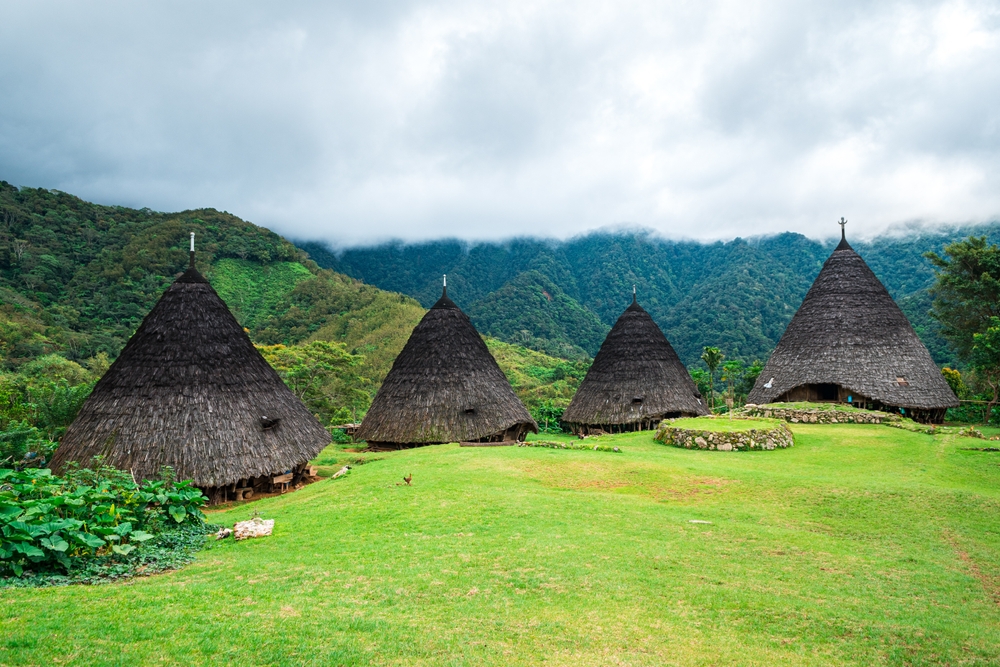
The main attraction that has made this village world-famous is the presence of seven cone-shaped traditional houses called Mbaru Niang. This iconic architecture is not merely a dwelling but a symbol of protection and unity for the community.
Visiting Wae Rebo means preparing yourself for a comfortable silence, far from internet signals, accompanied only by a blanket of stars at night and the mist that rolls over the green hills at dawn.
Related Article: 9 Destinations for Sailing & Snorkeling While Enjoying the Beauty of Labuan Bajo
Signature Activities of the Wae Rebo Community
The people of Wae Rebo live in a rhythm synchronized with the surrounding environment. Their daily activities are dominated by farming and gardening, with coffee being their primary commodity, processed using traditional methods. Additionally, you can observe the village women skillfully weaving Songke cloth with distinct Manggarai motifs.
Every activity here is performed with a strong principle of mutual cooperation (gotong royong), especially during the Penti traditional ceremony, a celebration of gratitude for the harvest.
How to Get to Wae Rebo
The journey to Wae Rebo is a physical adventure that is both challenging and rewarding. The starting point usually begins in Labuan Bajo, heading to Denge Village via a land route that takes approximately 5 to 6 hours.
Upon arriving in Denge, you must continue with a trek up a trail that cuts through a protected forest. Ensure you are in good physical condition, as the path is quite demanding yet offers extraordinary tropical forest views.
Essential Tips Before Visiting Wae Rebo
There are several things you must prepare to ensure your trip to Wae Rebo remains comfortable and safe.
1. Entrance Fees and Accommodation
For those wishing to visit, there are two pricing schemes. For a Day Trip, the fee is IDR 225,000 per person, which includes meals (breakfast/lunch and dinner) and a welcome drink of local coffee or tea.
If you wish to experience an overnight stay inside an Mbaru Niang, the rate is IDR 325,000 per person. In addition to meals, you will be provided with a folding mattress and a blanket. If you require assistance, local guide services are available for IDR 250,000 per person to ensure an informative and safe journey.
2. Trekking Duration
The trekking duration from Denge Village to Wae Rebo depends heavily on your walking pace and physical condition. Generally, the hike takes about 3 to 4 hours. The route consists of three rest posts with fairly steep terrain, but the effort is fully rewarded the moment you see the peaks of the Mbaru Niang houses from a distance.
3. The Mountain Air
Being high in the mountains makes the air in Wae Rebo very cool; it can even feel freezing at night, reaching 15°C or lower during the dry season. It is highly recommended to bring a thick jacket, socks, and extra sleeping gear if you are not accustomed to extreme mountain temperatures.
Related Article: The Best Sunsets in Mandalika 5 Spots You Must Visit
Every corner of Wae Rebo possesses a captivating atmosphere born from the harmony between humanity and tradition. Before you arrive, plan your journey thoroughly with MaiA, who is ready to accompany you and answer all your questions about Wae Rebo.
You can also utilize the AI Plan Your Trip feature to create an itinerary that best fits your adventure style, ensuring your visit to Wae Rebo becomes a truly unforgettable, once-in-a-lifetime experience.