






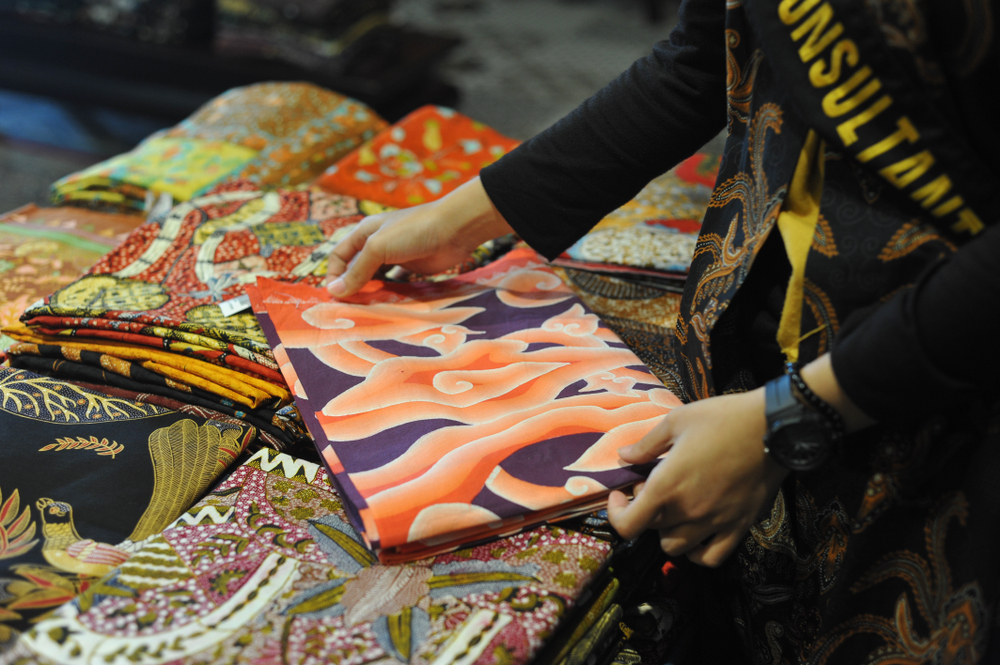
Batik Trusmi is one of Cirebon’s cultural heritages that has gained wide recognition at the national level. This traditional batik is produced in Kampung Batik Trusmi, located in Plered District, approximately four kilometers west of Cirebon City center.
Known for its striking colors and distinctive motifs, Batik Trusmi carries a long historical background closely connected to the cultural development of Cirebon. Let’s take a closer look at how Batik Trusmi first emerged and continues to thrive within the local community.
The Origins of Batik Trusmi
The origins of Batik Trusmi date back to the 14th century, when the tradition of batik-making began to flourish in the Cirebon region. The name Trusmi is believed to come from the phrase “terus bersemi”, meaning “to continuously flourish,” referring to the area’s fertile land that remained productive even after being cleared.
Today, this area is known as Kampung Batik Trusmi, where batik-making has grown into an essential part of the local cultural identity.
The history of Batik Trusmi is also closely linked to a royal story from the Cirebon Sultanate. At the time, the Sultan asked the people of Trusmi to recreate a batik cloth identical to his own. Remarkably, the artisans relied solely on memory during the process.
They succeeded, the resulting batik was so precise that the Sultan himself was reportedly unable to distinguish the original from the Trusmi-made version. Since then, the batik craftsmanship of the Trusmi community has been widely recognized, and the tradition continues to develop to this day.
The Uniqueness of Batik Trusmi
The uniqueness of Batik Trusmi lies in the cultural fusion reflected in its motifs. As a coastal region, Cirebon has long been influenced by various cultures, including royal court traditions, Chinese, Arab, and European elements.
This blend creates distinctive patterns rich in detail and strong character, setting Batik Trusmi apart from batik found in other regions.
Beyond its motifs, Batik Trusmi is also known for preserving traditional production techniques, particularly hand-drawn batik (batik tulis). The meticulous and time-consuming process ensures that each piece is unique and holds high artistic value.
Another defining feature is the variety of motifs, such as Mega Mendung, Singa Barong, and Wadasan, each carrying deep philosophical meanings related to life, nature, and local wisdom from Cirebon.
Related Article: 7 Enchanting Stories Behind Indonesia's Famous Batik
The Process of Making Batik Trusmi
Originally, Batik Trusmi was made using white cotton fabric known as mori. Over time, the materials have become more diverse, ranging from silk and rayon to polyester and other synthetic fabrics.
The motifs are drawn using melted wax (malam), applied with a canting for fine details or a brush for larger patterns, allowing the wax to penetrate the fabric fibers.
Once the waxing process is complete, the cloth is dyed, usually starting with lighter colors before progressing to darker shades. This dyeing process may be repeated several times depending on the complexity of the design.
The final stage is pelorodan, where the fabric is immersed in a special solution to remove the wax, revealing the batik pattern permanently.
Types of Batik Trusmi
Like batik in general, Batik Trusmi comes in several types to suit different preferences. The two most well-known are batik tulis (hand-drawn batik) and batik cap (stamped batik), both of which are still produced today.
Batik tulis is entirely handmade, making each piece truly one of a kind. The production process can take around two to three months, which explains its relatively higher price.
Meanwhile, batik cap is made using patterned copper stamps. The process is much faster usually two to three days making it more affordable compared to batik tulis.
Experience Batik Trusmi in Cirebon
You can witness the beauty of Batik Trusmi firsthand by visiting Cirebon and observing the batik-making process directly in Kampung Batik Trusmi. From the diversity of motifs to the cultural stories woven into each piece, this experience offers a deeper perspective on Cirebon’s rich cultural heritage.
Related Article: Learn How to Make Batik Directly from the Craftsmen in these 7 Batik Villages!
To help plan your visit, MaiA is ready to provide recommendations on the best time to visit, exciting activities, and other interesting destinations around Cirebon.
For a more organized and personalized journey, you can also create your itinerary easily with AI Plan Your Trip, a feature designed to arrange travel plans based on your interests and available time.
Don’t wait any longer, start planning your trip and enjoy an unforgettable cultural journey in Cirebon.