





Credit Photo: Shutterstock/Akhmad Dody Firmansyah
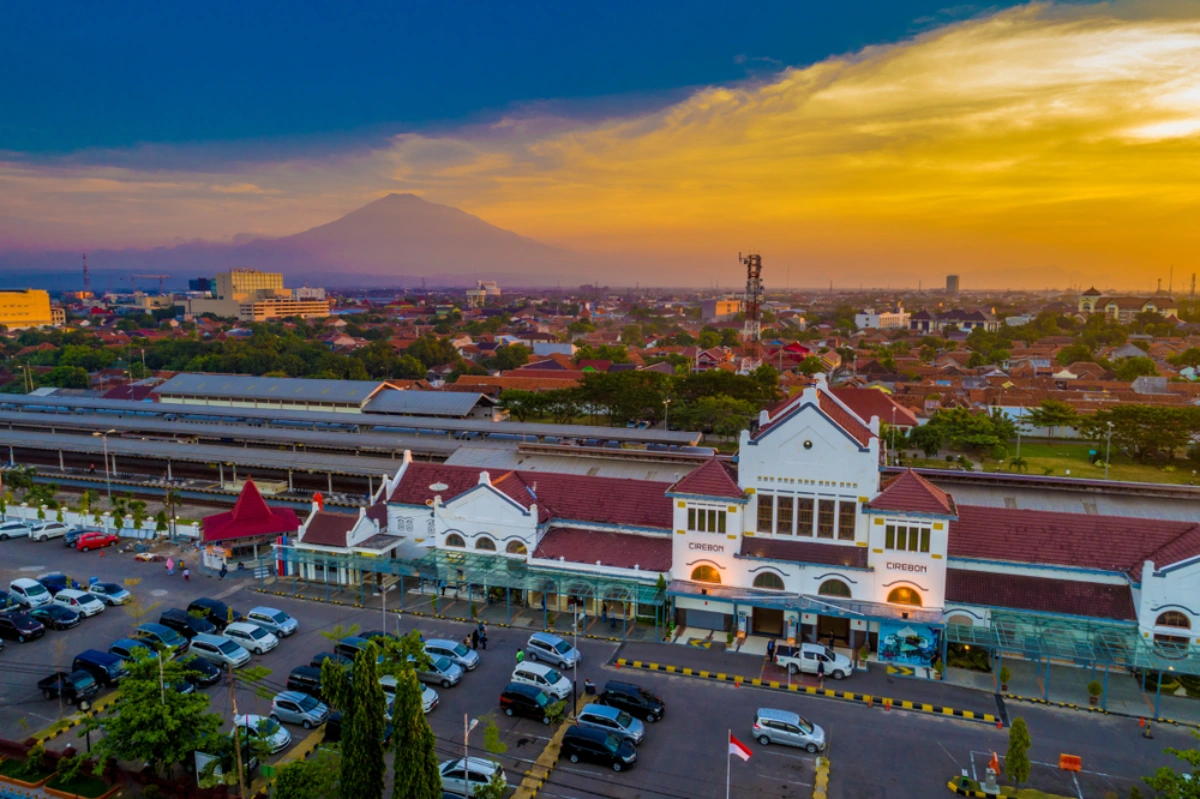
The City and Regency of Cirebon hold a wealth of past heritage that is highly captivating and rich in Nusantara cultural values.
Exploring various corners of this area will take you on an adventure tracing the footsteps of the civilization of the wali and sultanates of the past, which have now become part of the West Java region.
10 Historical Places in Cirebon
The Cirebon region has been known as one of the important centers for the spread of Islam and culture on Java Island for centuries. Here is a list of heritage destinations from the past in Cirebon that you must visit:
1. Keraton Kasepuhan
Keraton Kasepuhan was founded in 1529 by Pangeran Mas Zainul Arifin as the center of government for the Cirebon Sultanate.
Its uniqueness lies in the architecture of the ancient red-brick walled buildings and the collection of the Singa Barong royal carriage, a legacy of Sunan Gunung Jati. This palace complex formerly functioned as a center of political power and Islamic propagation, and is now well-maintained as a cultural museum.
- Address: Kesepuhan Ward, Lemahwungkuk District, Cirebon City.
- Opening Hours: Open daily from 08:00 to 17:00 WIB.
- Admission Fee: Starting from Rp20,000 per person.
2. Keraton Kacirebonan
Keraton Kacirebonan was built in 1808 at the initiative of Pangeran Raja Karna as a splinter of the Kasepuhan Sultanate.
Its uniqueness is visible in the architectural style that blends touches of Javanese, Chinese, and European elements, as well as housing a collection of ancient heirlooms. This palace was formerly used as a residence for the new sultan of the breakaway palace, and currently actively functions as a center for preserving tradition.
- Address: Jalan Pulasaren, Pekalipan District, Cirebon City.
- Opening Hours: Open daily from 08:00 to 16:00 WIB.
- Admission Fee: Starting from Rp15,000 per person.
3. Keraton Kanoman
Keraton Kanoman was established in 1678 by Sultan Mohamad Badrudin as the government center of the breakaway Cirebon Sultanate.
Its uniqueness lies in having many historical artifacts, such as antique decorative plates on the walls, and a distinctive ancient building complex. This place was formerly the center of the sultanate's government, and today it remains preserved as a center of culture and ancestral heritage.
- Address: Jalan Kanoman, Lemahwungkuk, Lemahwungkuk District, Cirebon City.
- Opening Hours: Open daily from 08:00 to 16:00 WIB.
- Admission Fee: Starting from Rp15,000 per person.
4. Kampung Batik Trusmi
Kampung Batik Trusmi originated from the history of the struggle of Ki Gede Trusmi, a disciple of Sunan Gunung Jati in the 15th century.
Its uniqueness lies in the generational tradition of making megamendung batik, which is still preserved directly by local artisans. This area was once a base for spreading religion while making batik, and now functions as an industrial and shopping center for batik.
- Address: Jalan Syekh Datul Kahfi, Weru Kidul Village, Plered District, Cirebon Regency.
- Opening Hours: Open daily from 08:00 to 21:00 WIB.
- Admission Fee: Free.
5. Gedung Perundingan Linggarjati
The Linggarjati Negotiation Building is a silent witness to the diplomatic negotiations between Indonesia and the Netherlands, inaugurated in November 1946.
Its uniqueness lies in its clean white Dutch colonial architectural building, surrounded by a lush mountain garden. This place was once used as a venue for diplomatic roundtables, and its condition is now protected as a national history museum.
- Address: Linggarjati Village, Cilimus District, Kuningan Regency (directly bordering the Cirebon region).
- Opening Hours: Open daily from 08:00 to 16:00 WIB.
- Admission Fee: Starting from Rp5,000 per person.
Read Also: Tracing the History of Batik Trusmi and Its Uniqueness
6. Kota Lama Cirebon
The Kota Lama Cirebon area began to develop rapidly as an international trading port hub since the colonial era in the 19th century.
Here, there is a row of old European colonial architectural style buildings standing firmly along the city streets. This area formerly functioned as a colonial administrative and commercial center, and is now a preserved heritage area.
- Address: Pecinan and Lemahwungkuk Port Area, Cirebon City.
- Opening Hours: Open to the public daily for 24 hours.
- Admission Fee: Free.
7. Wisata Keramat Sindang Pancuran
Wisata Keramat Sindang Pancuran is a sacred petilasan (relic) site closely related to the history of the spread of Islam by Sunan Gunung Jati.
Its uniqueness lies in its natural spring water spout, which the local community believes holds its own historical value and spiritual power. This place was once used as a means of purification by the wali, and is now frequently visited by religious pilgrims.
- Address: Sindang Pancuran Village, Beber District, Cirebon Regency.
- Opening Hours: Open daily for 24 hours.
- Admission Fee: Free.
8. Gua Sunyaragi
Gua Sunyaragi was built in 1703 by Pangeran Karang Asem as a pesanggrahan (resting place) and meditation site for the sultans.
Its uniqueness lies in its artificial cave building complex made of coral and sandstone with a highly artistic architecture. This place was once used as a meditation site for the palace family, and is now a popular ancient cultural heritage site.
- Address: Jalan By Pass Brigjen Dharsono, Sunyaragi, Kesambi District, Cirebon City.
- Opening Hours: Open daily from 08:00 to 17:00 WIB.
- Admission Fee: Starting from Rp15,000 per person.
9. Benteng Pendem
Benteng Pendem is a Dutch colonial underground military defense fort complex built in 1879.
Its uniqueness lies in the sturdy structure of the underground bunker buildings, surrounded by a strategic defense moat. This fort formerly functioned to protect the coastal area from enemy attacks, and is now a military history site.
- Address: Cirebon Coastal Area.
- Opening Hours: Open daily from 08:00 to 16:00 WIB.
- Admission Fee: Starting from Rp10,000 per person.
10. Kelenteng Talang
Kelenteng Talang was established in the 15th century by early Chinese sailors who arrived with Admiral Cheng Ho's fleet.
Its uniqueness lies in blending classic traditional Chinese architecture with local historical Cirebon building materials. This place was once the worship center for the ethnic Chinese community who pioneered trade, and is now active as a house of worship and a cultural heritage site.
- Address: Jalan Talang, Lemahwungkuk, Lemahwungkuk District, Cirebon City.
- Opening Hours: Open daily from 07:00 to 18:00 WIB.
- Admission Fee: Free.
Read Also: Mount Papandayan: Exploring a Favorite Hiking Destination in West Java
Tips for Visiting Historical Places
Paying attention to etiquette and preparation before visiting will make your educational trip even more meaningful and memorable. Check out these tips when you are about to explore historical sites:
- Wear polite and modest clothing to respect the sanctity and customary rules applicable in ancient building complexes.
- Keep the surrounding environment clean by not littering, and do not damage archaeological artifacts.
- Adhere to all prohibitive signs provided by the management, especially the rules prohibiting touching heirlooms or ancient wall structures.
- Use the services of a local tour guide if available so that you can get an accurate and in-depth historical explanation.
- Prepare yourself physically and wear comfortable footwear, as most of these destinations require a lot of walking.
Read Also: Mega Mendung Batik Motif, Cirebon's Globally Renowned Art Icon
Come on, immediately Plan Your Trip by creating a special itinerary starting now, so that this exploration of historical places in Cirebon can be well-planned.
Also ask for various recommendations and information from MaiA, an advanced virtual assistant ready to accompany your trip and provide the right recommendations for you.
References:
https://siceppot.cirebonkota.go.id/index.php/detail_pariwisata/keraton-kasepuhan
https://kelpulasaren.cirebonkota.go.id/profil/cagar-budaya-1
https://siceppot.cirebonkota.go.id/index.php/detail_pariwisata/keraton-kanoman
https://cirebonkab.go.id/jejak-budaya-batik-trusmi-di-kabupaten-cirebon/
https://kelpekalangan.cirebonkota.go.id/profil/sejarah-kelurahan-pekalangan-kota-cirebon
https://cirebonkab.go.id/rekomendasi-wisata-religi-di-kabupaten-cirebon/
https://siceppot.cirebonkota.go.id/index.php/detail_pariwisata/taman-sari-gua-sunyaragi https://disporapar.cilacapkab.go.id/artikel/sekilas-tentang-benteng-pendem-bag-i/
Photo Credit:
Shutterstock/Akhmad Dody Firmansyah