





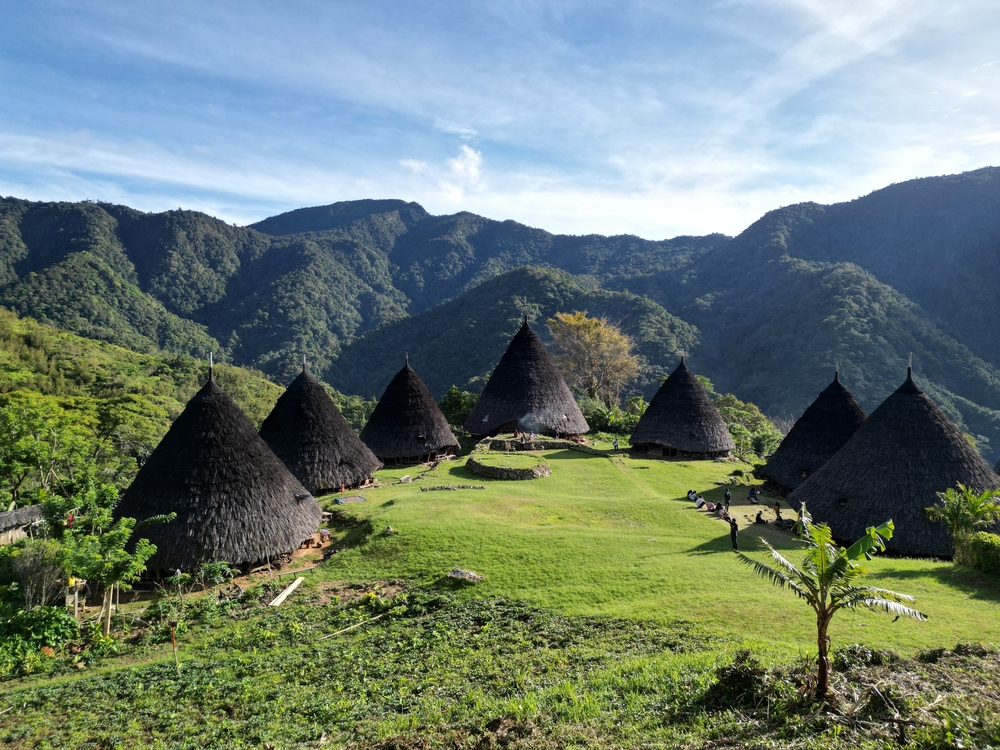
Hidden in the highlands of Manggarai, Flores, Wae Rebo Village offers a cultural experience that feels both beautiful and quietly magical. Surrounded by rolling green hills and morning mist that gently drapes the landscape, this traditional village is widely known as the “village above the clouds.”
More than just a destination, Wae Rebo is a living community where ancestral traditions are carefully preserved. The stillness of nature blends seamlessly with its iconic traditional architecture, creating an atmosphere that feels rare and deeply authentic.
History and Origins of Wae Rebo Village
Wae Rebo is located in Manggarai Regency, East Nusa Tenggara, at an elevation of approximately 1,000 to 1,200 meters above sea level. Its highland setting means the village is often blanketed in mist, which is how it earned its poetic nickname as the village above the clouds.
According to oral tradition, Wae Rebo was founded by Empo Maro, an ancestor of the Manggarai people who is believed to have come from Minangkabau in West Sumatra. He settled in the mountainous region and established a community that later developed into the traditional village seen today.
To this day, the people of Wae Rebo continue to uphold the lineage and customary structure passed down from their ancestors. The name “Wae Rebo” itself comes from the word wae, meaning water, and rebo, referring to a type of plant that grows in the surrounding area.
Achievements of Wae Rebo Traditional Village
Wae Rebo has gained international recognition for its dedication to cultural preservation. In 2012, the village received the Award of Excellence from the UNESCO Asia-Pacific Awards for Cultural Heritage Conservation.
The award honored the local community’s success in revitalizing the traditional Mbaru Niang houses while maintaining original construction techniques and materials.
This achievement not only elevated Wae Rebo’s name globally but also demonstrated the community’s strong commitment to safeguarding cultural heritage amid modern development.
Related Article: 3 Islands in Labuan Bajo That Should Be on Your Vacation List
Mbaru Niang Traditional Houses: The Icon of Wae Rebo
The defining feature of Wae Rebo is its cone-shaped traditional houses known as Mbaru Niang. Each house consists of five levels, with different functions on every floor, ranging from living quarters to storage spaces for harvests.
Constructed from wood, bamboo, and palm fiber or lontar leaves, the structures are assembled without modern nails. Today, seven Mbaru Niang houses stand in a circular formation at the center of the village, symbolizing unity and togetherness within the Manggarai community.
Their distinctive design has made Mbaru Niang an enduring symbol of authentic and meaningful Indonesian traditional architecture.
Things to Do in Wae Rebo Village
A visit to Wae Rebo is not only about enjoying scenic views, but also about experiencing traditional village life firsthand.
Here are some activities you can enjoy:
- Trek to the village through forest trails and hills for approximately two to three hours.
- Stay overnight inside a Mbaru Niang house to experience the peaceful and authentic atmosphere.
- Participate in the traditional welcoming ritual led by village elders.
- Savor locally grown Flores coffee while watching the sunrise above the mountain mist.
- Interact with villagers and learn about their traditions and local crafts.
These experiences offer a deeper perspective on the harmony between people and nature.
How to Get to Wae Rebo Village
Your journey to Wae Rebo can begin from Labuan Bajo or Ruteng. From Labuan Bajo, the overland trip to Denge Village takes approximately five to six hours.
Upon arrival in Denge, you will need to trek around seven kilometers uphill to reach Wae Rebo. The trail is moderately challenging but generally safe, taking about two to three hours depending on your physical condition.
As access can be demanding, proper physical preparation and logistical planning are essential before departure.
Tips for Visiting Wae Rebo Village
To ensure a comfortable and respectful visit, consider the following tips:
- Wear modest and comfortable clothing suitable for trekking.
- Bring sufficient cash, as there are no ATMs in the area.
- Pack personal essentials such as a raincoat, warm jacket, and basic medication.
- Follow local customs and the guidance of village elders or local guides.
- Keep the environment clean and avoid leaving trash along the trail or in the village.
Remember that respecting local culture and the natural environment is an integral part of the Wae Rebo experience.
Related Article: Padar Island: Unmissable Travel Gem
Wae Rebo offers a cultural journey seamlessly woven into the dramatic mountain landscape of Flores. If you are ready to explore this village above the clouds, plan your adventure with AI Plan Your Trip to create a personalized itinerary tailored to your interests, schedule, and travel style.
Curious about the best time for trekking, estimated homestay costs in Mbaru Niang, or preparation tips before the hike? Ask MaiA for quick and practical travel insights to make your journey to Wae Rebo more organized, comfortable, and memorable.