



7 Traditional Fabrics of North Sumatra
North Sumatra has a rich variety of distinctive fabrics, each reflecting the identity and cultural values of its diverse people.
-
Ulos Weaving (Toba)
Ulos is a traditional fabric of the Batak Toba people, used in various ceremonial rituals. Made using the ikat weaving technique, this fabric symbolizes love, prayers, and blessings. The dominant colors of red, black, and white represent bravery, sorrow, and purity. Ulos is often given during events such as weddings, births, and funerals. -
Uis Gara (Karo)
This traditional Karo fabric is worn at cultural ceremonies, featuring colors like red, black, and gold, along with floral and fauna motifs. Uis Gara represents social status and respect, while also serving as a cultural identity of the Karo people. -
Uis Nipes (Karo)
Uis Nipes is a simpler variation of the Karo fabric, used for daily activities or specific ceremonies. It is commonly worn by women during traditional events, such as weddings, still reflecting traditional values. -
Beka Buluh (Karo)
This exclusive Karo fabric features bamboo (buluh) motifs and is used in special ceremonies like the awarding of titles. The patterns and colors represent grandeur and unity in Karo culture. -
Kain Oles (Pakpak)
Kain Oles is a distinctive fabric from the Pakpak region, with simple patterns reflecting daily life and local beliefs. It is worn during ceremonies such as weddings and the installation of customary leaders. -
Kain Hiou (Simalungun)
Hiou is the traditional fabric of the Simalungun people, with bright colors such as red, yellow, and black. It is used in rituals and symbolizes the relationship between humans, nature, and the Creator, representing unity and prayer. -
Songket (Malay)
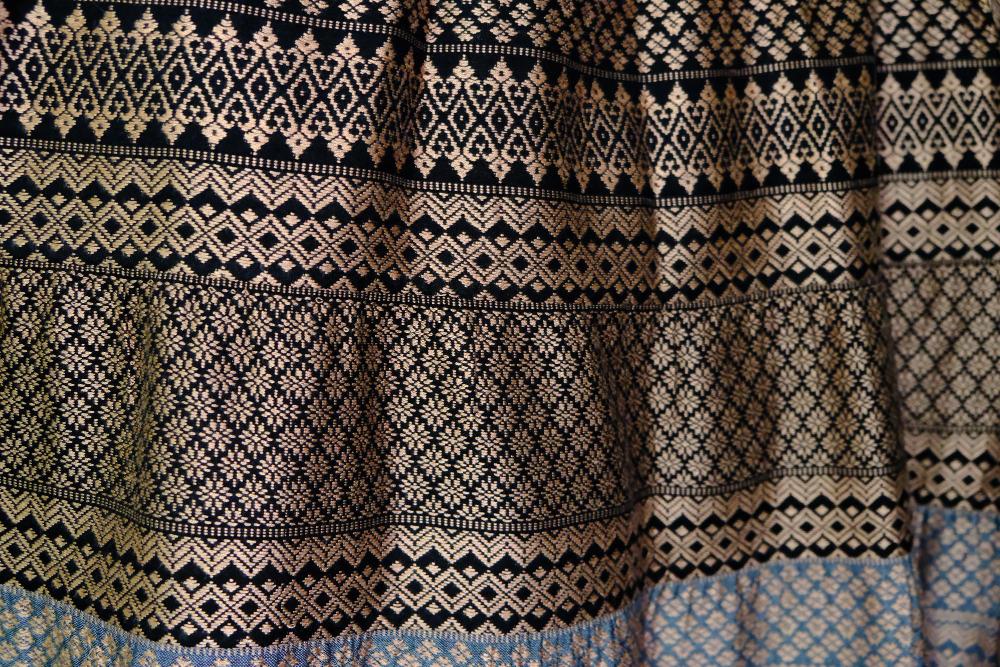
Malay Songket is a woven fabric with gold or silver threads, creating luxurious patterns. This fabric symbolizes prosperity and honor, often worn during weddings or traditional inaugurations. Its intricate production process makes it a valuable cultural heritage.