








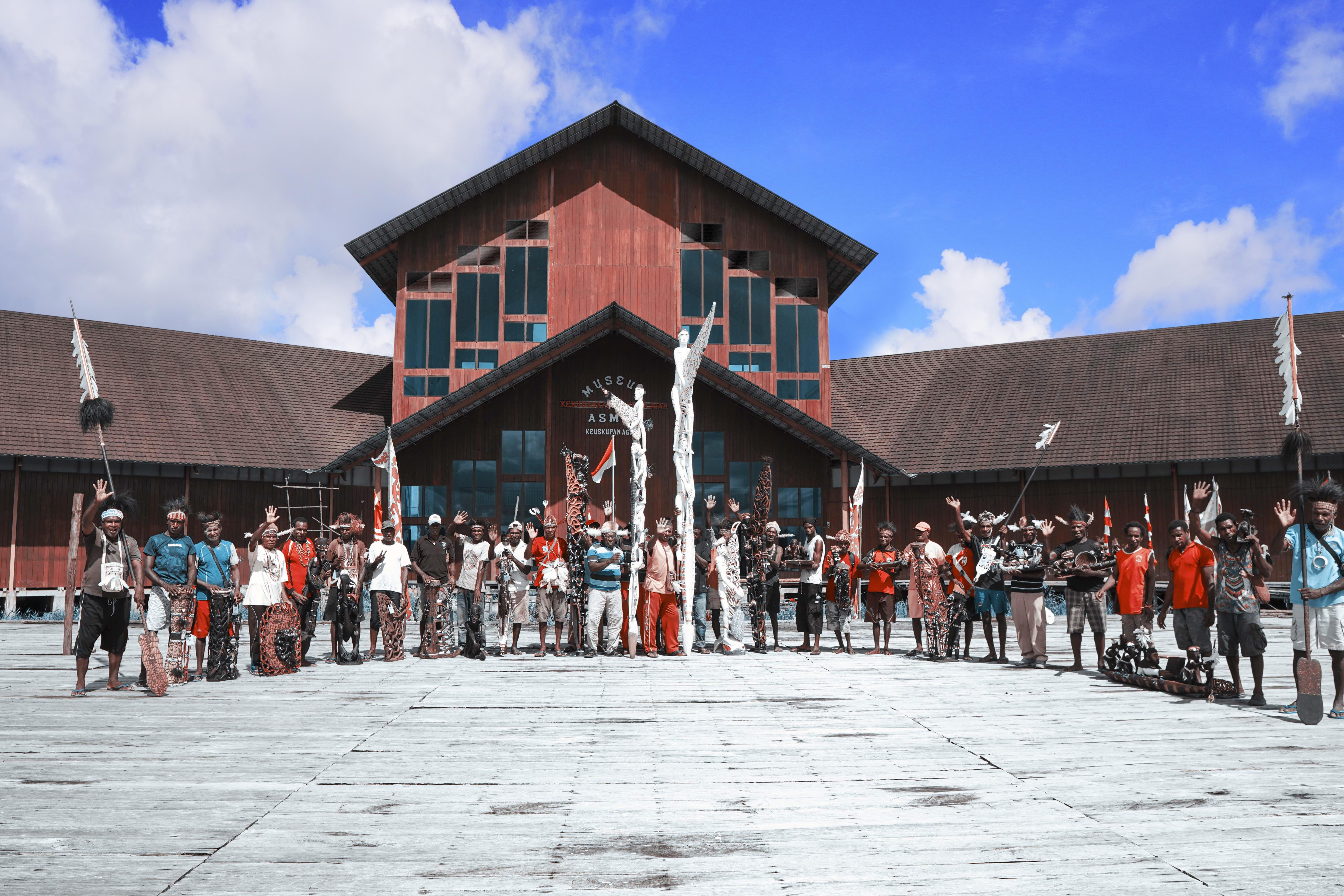
The Museum Kebudayaan dan Kemajuan Asmat, also known in English as the Museum of Asmat Culture and Progress, is a specialized cultural museum in Agats, South Papua, Indonesia, dedicated to preserving the art, traditions, and history of the Asmat people. It provides visitors with deep insight into Asmat’s rich cultural heritage and artistic legacy.
Type and Management Museum of Asmat Culture and Progress
This museum is classified as a special museum (Type C) focused on the cultural and artistic achievements of the Asmat community, offering a collection and narrative centered on one indigenous cultural group rather than a broad general history.
The museum is owned and managed by the Diocese of Agats–Asmat through the Asmat Culture and Progress Foundation, which has guided its development and preservation efforts since its inception.
History of The Museum of Asmat Culture and Progress
The idea for the museum was launched in 1969 by Catholic missionary Pastor Frank Trenkenschuh, OSC, who sought to protect Asmat cultural artifacts and share them with broader audiences. Collected materials from various missionaries and researchers formed the basis of the museum’s exhibits.
It officially opened on 11 August 1973, aiming to give both locals and outsiders a tangible connection to Asmat cultural history. Since then, the museum has expanded and modernized, with a major reopening in 2016 under local leadership.
Collections Museum of Asmat Culture and Progress
The museum houses over 1,200 cultural artefacts, including wood carvings, shields, traditional drums (tifa), spears, sculpture poles, and masks that depict not only spiritual beliefs but also daily life and social roles within the Asmat society.
Vision & Mission Museum of Asmat Culture and Progress
Its vision is to serve as an educational resource and cultural reference where visitors of any background can gain authentic insights into Asmat heritage.
The museum’s mission includes efforts to:
- Preserve and document Asmat cultural values.
- Provide educational displays and publications about Asmat heritage.
- Develop partnerships with institutions that support cultural preservation.
Educational & Tourism Role
The museum plays a key role in regional cultural tourism, drawing visitors interested in traditional art forms and indigenous cultures. Through exhibition halls, storytelling, and multimedia displays, it connects audiences with the unique worldview of the Asmat people.