



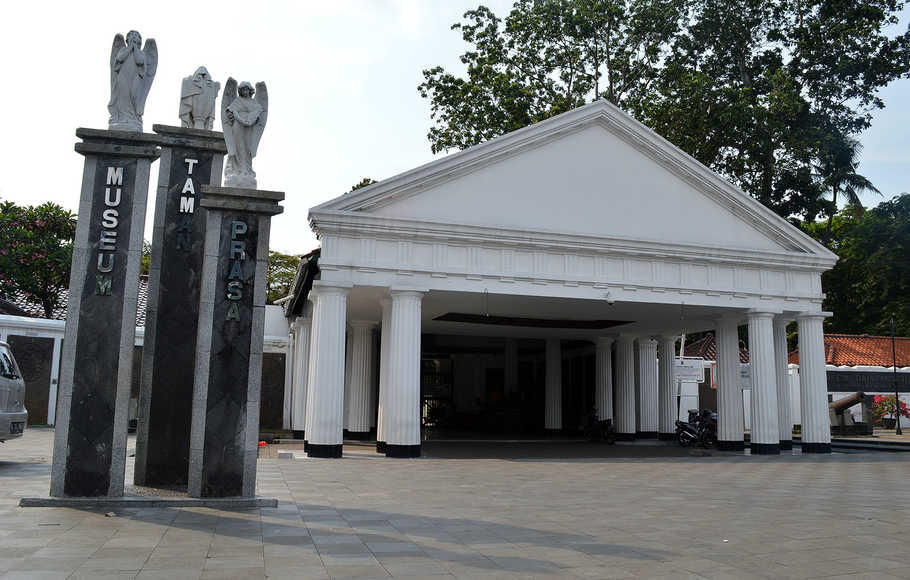
Prasasti Museum, also known as Taman Prasasti Museum, is one of Indonesia’s most distinctive historical museums. As part of the official Museum Registration system under the Ministry of Education, Culture, Research, and Technology, this museum plays a crucial role in preserving National Museum collections related to Indonesia’s colonial past and cultural heritage. Registered with the National Museum Registration Number (NPNM) 31.71.K.03.0191, Prasasti Museum stands as an important reference within the network of Indonesian Museums.
Located at Jl. Tanah Abang I No. 1, Central Jakarta, the museum occupies a former colonial cemetery site, transforming it into an open-air educational space that invites visitors to reflect on history, culture, and the evolution of Jakarta as a city.
What Is Prasasti Museum?
Prasasti Museum is a specialized museum dedicated to funerary heritage, featuring historic gravestones, inscriptions, memorial monuments, and burial artifacts from the colonial era and beyond. Unlike conventional indoor museums, Prasasti Museum presents its museum collections in an open landscape, allowing visitors to experience history in a more immersive and contemplative environment.
The museum highlights how funerary traditions reflect social status, cultural values, religious beliefs, and political influence in different periods of Indonesian history, particularly during the Dutch colonial era.
Museum Type and Classification
- Museum Category: Specialized Museum
- Museum Type: Type C Museum
As a Type C specialized museum, Prasasti Museum focuses on a specific historical theme while serving educational, cultural, and research purposes. It supports Indonesia’s broader mission to document and preserve tangible cultural heritage through structured museum registration and national museum standards.
Museum Management and Ownership
Prasasti Museum is owned by the Government of DKI Jakarta and managed by the Jakarta History Museum Management Unit. The managing body is responsible for conservation, collection maintenance, educational programming, exhibitions, and public engagement initiatives.
Through professional museum management, Prasasti Museum continues to strengthen its role as a cultural learning space accessible to students, researchers, local communities, and international visitors.
History of Prasasti Museum
The site originally functioned as Kebon Jahe Kober Cemetery, established in 1795 during the Dutch colonial period. It served as a burial ground for high-ranking colonial officials, European settlers, and influential figures in Batavia.
As urban development expanded, much of the cemetery area was reduced. Recognizing its historical significance, the remaining section was officially inaugurated as Prasasti Museum on July 9, 1977, marking a transformation from a burial ground into a cultural heritage museum.
Today, although the land area has decreased, the remaining collections preserve invaluable historical narratives that reflect Jakarta’s colonial past and multicultural society.
Museum Collections
The National Museum collections at Prasasti Museum include:
- Colonial-era gravestones and inscriptions made of marble, stone, and metal
- Miniature traditional tombs representing burial cultures from various regions in Indonesia
- Antique hearses and funeral equipment
- Memorial monuments of prominent historical figures, including Olivia Mariamne Raffles and Soe Hok Gie
These collections make Prasasti Museum a unique Indonesian Museum, bridging history, art, and cultural anthropology.
Vision of Prasasti Museum
The vision of Prasasti Museum is to become a representative open-air museum that showcases funerary heritage while documenting the historical development of Jakarta’s society, culture, and political life. The museum aims to be a source of pride and knowledge for the Indonesian public and future generations.
Mission of Prasasti Museum
The museum’s mission includes:
- Enhancing public understanding of Jakarta’s history through funerary and inscription collections
- Preserving and conserving historical artifacts as part of Indonesia’s national heritage
- Organizing educational programs and historical exhibitions
- Building partnerships with cultural institutions and stakeholders to strengthen museum development