





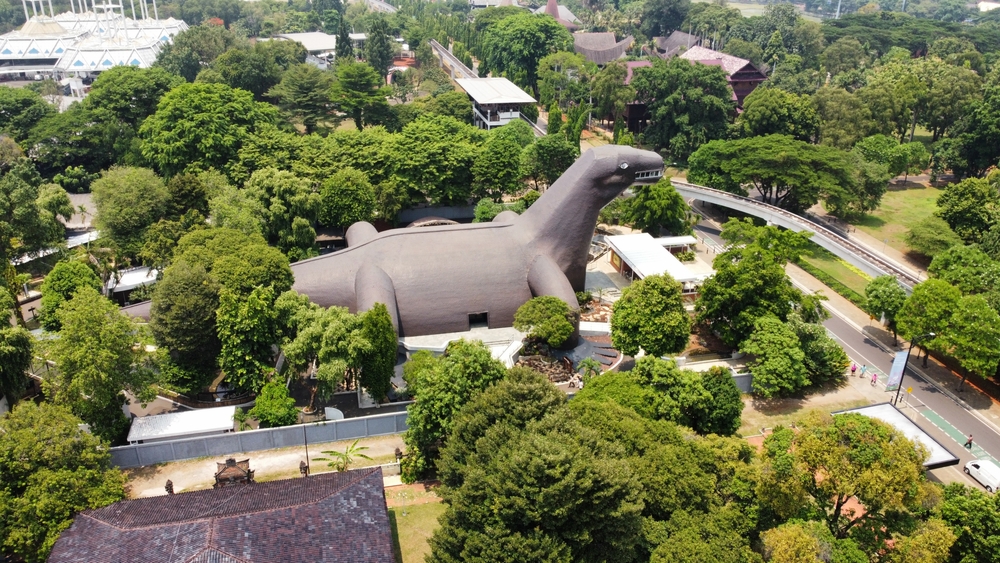
The Museum Fauna Indonesia Komodo and Reptile Park is a specialized museum that plays an important role in introducing Indonesia’s rich fauna to the wider public. Located in the Taman Mini Indonesia Indah (TMII) complex in East Jakarta, the museum serves as an educational facility that integrates scientific information, visual experiences, and interactive approaches to present the diversity of Indonesian wildlife, particularly reptiles and amphibians.
The Museum Fauna Indonesia Komodo and Reptile Park is a thematic museum that showcases Indonesian fauna through preserved specimens, replicas, and live animals. The museum is designed to provide a comprehensive understanding of Indonesia’s biodiversity, fauna distribution, and the importance of wildlife conservation efforts. Its primary focus is on reptiles, one of the fauna groups with a high level of uniqueness and significant ecological value.
Museum Type and Management
Based on the national museum classification system, the Museum Fauna Indonesia Komodo and Reptile Park is categorized as a specialized museum, as it carries a specific theme related to Indonesian fauna. The museum is also classified as a Type C museum, with its main functions including education, information dissemination, and knowledge-based recreation for the general public.
The Museum Fauna Indonesia Komodo and Reptile Park is owned by the State Secretariat of the Republic of Indonesia and managed by Yayasan Harapan Kita. The museum is professionally managed to ensure the sustainability of its educational, conservation, and public service functions, while maintaining the quality of care for its collections and live animals.
History of the Museum
The construction of the Museum Fauna Indonesia Komodo began on October 1, 1975, and was completed on July 1, 1976. The museum was officially inaugurated on April 20, 1978, by the President of the Republic of Indonesia. Its establishment was part of the development of educational facilities within the TMII area, aimed at introducing Indonesia’s natural and cultural wealth in an integrated manner.
As its educational and conservation roles expanded, the museum area was further developed into a Reptile Park on October 19, 1999. This development enabled the museum to display live reptiles and amphibians. In 2010, the Museum Fauna Indonesia Komodo and Reptile Park was designated as an ex-situ conservation institution, strengthening its role in the care and protection of wildlife.
Iconic Architecture and Animal Exhibitions as Representations of Indonesian Fauna
The Museum Fauna Indonesia Komodo and Reptile Park features an architectural design inspired by the form of the Komodo dragon, an ancient reptile endemic to East Nusa Tenggara. The museum occupies an area of approximately 10,120 m², with a building area of around 1,500 m². This distinctive architectural form symbolizes the strength and uniqueness of Indonesian fauna, while serving as a visual introduction that guides visitors into the narrative of the nation’s biodiversity.
In addition, the animal exhibitions inside the museum are arranged to follow Indonesia’s geographical journey from west to east. This exhibition layout allows visitors to explore reptile fauna from various islands and ecosystems, presented within settings that reflect their natural environments. Such an arrangement helps visitors understand fauna distribution and the relationship between animals, their habitats, and Indonesia’s geographical regions.
Interactive Educational Experiences
The Museum Fauna Indonesia Komodo and Reptile Park displays a wide range of live reptile collections, including Komodo dragons, pythons, legless lizards, monitor lizards, iguanas, turtles, and various species of crocodiles. The presence of live collections provides a more tangible and in-depth learning experience. Visitors can directly observe the characteristics, behaviors, and ecological roles of reptiles within their ecosystems.
As part of its interactive learning approach, the museum provides a dedicated area known as Plaza Padar. In this area, visitors—particularly children—can engage in limited interactions with animals such as pythons under the supervision of trained professionals. These activities are designed to foster curiosity, appreciation for wildlife, and awareness of the importance of animal safety and welfare.
The Museum’s Role in Education and Conservation Awareness
Overall, the Museum Fauna Indonesia Komodo and Reptile Park serves as a space for education and appreciation of Indonesian fauna. Through its iconic architecture, narrative-based exhibitions, live animal collections, and interactive experiences, the museum encourages the public to recognize, understand, and value Indonesia’s biodiversity. This role aligns with efforts to conserve wildlife and to strengthen public awareness of the importance of protecting natural heritage as an integral part of national identity.