






The Indonesia Stamp Museum is a specialized museum dedicated to introducing the history, functions, and artistic value of postage stamps as well as postal communication in Indonesia. The museum presents stamp collections from various historical periods, philatelic artifacts, and historical narratives that illustrate the development of correspondence as an essential part of Indonesia’s communication culture.
Located within the Taman Mini Indonesia Indah (TMII) complex in East Jakarta, the museum serves as an educational destination that appeals to students, families, and philately enthusiasts.
Type and Management of the Indonesia Stamp Museum
The Indonesia Stamp Museum is classified as a specialized museum within the national museum system of Indonesia. It focuses on a single main theme, namely the history of postage stamps, philately, and the development of postal services in Indonesia.
As a specialized museum, its role goes beyond displaying historical objects. It integrates cultural context, printing technology, and the significance of stamps as markers of important milestones in the nation’s history.
The Indonesia Stamp Museum is managed by PT Pos Indonesia (Persero), the institution responsible for national postal services and philately. Museum management includes the preservation of collections, exhibition curation, and the organization of educational programs and public visits.
The museum is also officially registered in the national museum database as one of Indonesia’s important institutions for philatelic collections.
History of the Indonesia Stamp Museum
The Indonesia Stamp Museum was established on 29 September 1983 following an initiative by Ibu Tien Soeharto after her visit to a stamp exhibition organized by PT Pos Indonesia during the 4th Asia-Pacific Scout Jamboree in Cibubur in June 1981. The museum building was later constructed in the TMII area as a commitment to preserving the history of postage stamps and postal culture in Indonesia.
The museum was inaugurated by President Soeharto on the same date and has since functioned as a space that showcases the history of Indonesian stamps from the colonial era through the independence period to modern times.
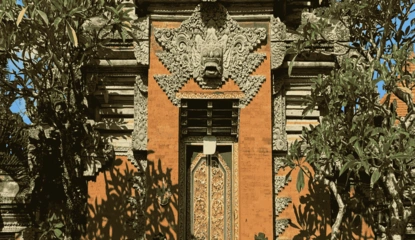
Architecturally, the museum features a traditional design that combines Balinese and Javanese elements, including a candi bentar gate that serves as the main entrance symbol to the museum complex.
Collections and Exhibitions
The Indonesia Stamp Museum displays stamp collections from various historical periods, including stamps issued as early as 1864 up to contemporary releases. These collections are organized into several exhibition rooms with different themes, ranging from the history of stamp printing and production processes to stamps depicting social, cultural, sports, and scouting themes.
Some exhibition areas also feature original printing machines, printing cylinders, and souvenir sheets, enriching visitors’ learning experiences regarding the evolution of postal communication technology.
Vision of the Indonesia Stamp Museum
As a specialized museum, the vision of the Indonesia Stamp Museum is to become a center for education and preservation of philatelic history and postal culture, providing a comprehensive understanding of the role of postage stamps within the historical, social, and cultural context of Indonesian society.
This vision is rooted in the museum’s objective to foster public appreciation of stamps as cultural artifacts that reflect national identity and the stages of Indonesia’s communication development.
Mission of the Indonesia Stamp Museum
To achieve its vision, the museum carries out several key missions:
- Presenting stamp collections and philatelic artifacts systematically for educational and research purposes.
- Providing educational facilities on postal and stamp history for students, the general public, and philately enthusiasts.
- Developing exhibition programs and interactive activities that enhance understanding of communication culture.
- Promoting the historical value of postage stamps as evidence of national sovereignty recognized internationally, as stamps can only be issued by countries acknowledged by the United Nations.
The Museum’s Role in Education and Communication Culture
The Indonesia Stamp Museum plays an important role in communicating the history of postal services, philately, and the evolution of communication technology to the public. Furthermore, it serves as an engaging learning space for younger generations to understand how postage stamps function as symbols of history, art, and culture.
The museum continues to undergo development to remain relevant and appealing to contemporary audiences, including plans for its transformation into the Indonesia Postal Museum (Museum Pos Indonesia/MUPI) with a broader scope and expanded educational functions.