





Indonesia is widely known for its rich cultural diversity, and one of its most influential cultural expressions is gamelan. More than a musical performance, gamelan represents a cultural language that weaves together sound, rhythm, spirituality, and social values. For centuries, its resonant tones have accompanied traditional ceremonies, religious rituals, performing arts, and everyday life across the archipelago.
As a vital part of Indonesia’s cultural identity, gamelan has gained global recognition after being officially inscribed on UNESCO’s Representative List of the Intangible Cultural Heritage of Humanity. This acknowledgment highlights gamelan not only as a national treasure, but also as a meaningful contribution to world culture.
What Is Gamelan?
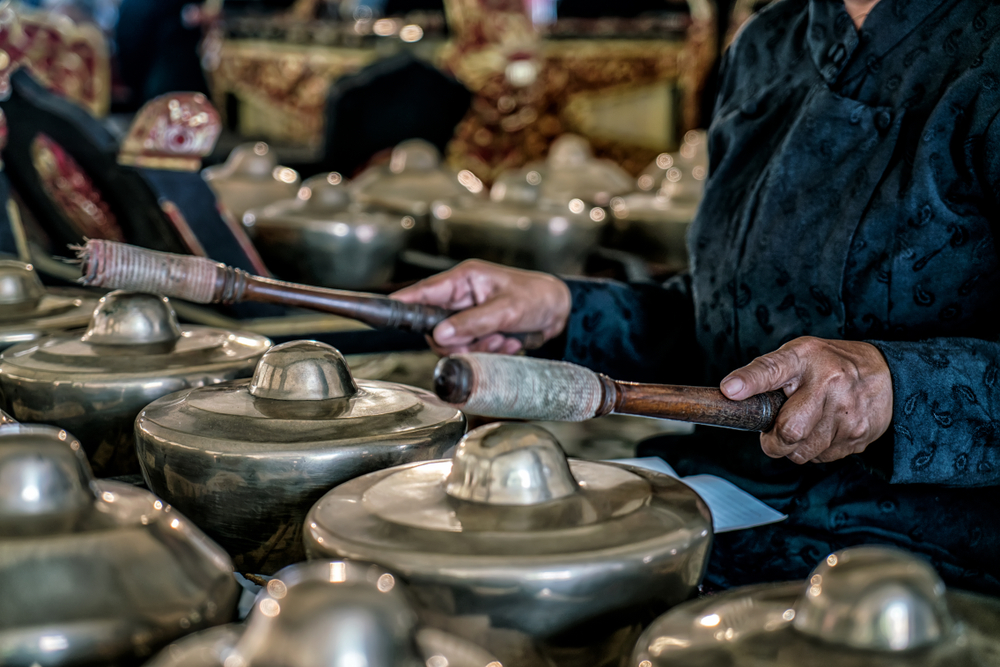
Gamelan is a traditional Indonesian musical ensemble dominated by percussion instruments, primarily made of metal such as gongs, metallophones, and kettles, complemented by drums, bamboo flutes, and string instruments. The music is performed collectively, emphasizing harmony and cooperation rather than individual virtuosity.
Within Indonesian tradition, gamelan is more than entertainment. It carries philosophical and spiritual meanings, reflecting balance in life, harmony between humans and nature, and the importance of communal values rooted in mutual respect and cooperation.
History and Development of Gamelan
The origins of gamelan can be traced back to the era of Hindu-Buddhist kingdoms in Indonesia. Ancient temple reliefs and historical manuscripts suggest that early forms of gamelan were used in royal courts as sacred music. Over time, gamelan evolved and spread across regions, adapting to local cultures and traditions.
In the 20th century, gamelan began to attract international attention through cultural exchanges, academic research, and global performances. Its worldwide appreciation culminated in UNESCO’s formal recognition in 2021, reaffirming gamelan’s cultural significance and its enduring relevance in modern society.
Varieties and Regional Characteristics
Although sharing common roots, gamelan developed distinct regional styles:
- Javanese gamelan is known for its calm, refined, and meditative character.
- Balinese gamelan features fast tempos and dynamic rhythms, reflecting ritual intensity and expressive performances.
- Sundanese gamelan emphasizes softer tones and melodic elegance.
This diversity demonstrates gamelan’s adaptability and its deep connection to the cultural landscapes of each region.
Cultural Meaning and Social Function
Gamelan plays an essential role as an educational tool, a ritual medium, and a social binder within communities. It is performed by people of all ages and backgrounds, reinforcing inclusivity and shared responsibility. Each musician contributes equally to the collective sound, symbolizing unity and social harmony.
In the context of cultural tourism, gamelan has become a key attraction for travelers seeking authentic Indonesian experiences. Performances are often combined with traditional dance and ceremonial events, offering visitors a deeper understanding of local heritage.
Gamelan as a Cultural Travel Experience
Cultural journeys centered around gamelan are suitable for various types of travelers. Solo travelers can enjoy its reflective and calming atmosphere. Friends traveling together can engage in interactive cultural activities, such as workshops and live performances. Meanwhile, family travelers benefit from educational experiences that introduce children to traditional arts in an engaging way.
Visiting cultural centers, art studios, and heritage villages that preserve gamelan traditions provides meaningful travel experiences while supporting local communities and cultural sustainability.
UNESCO’s recognition of gamelan marks not an endpoint, but a shared responsibility to preserve this living heritage. Gamelan continues to evolve, carried forward by communities that uphold its values of harmony, balance, and togetherness.
Through heritage-based tourism, gamelan can be introduced to the world as a symbol of Indonesia’s cultural richness. Experiencing gamelan is more than listening to music—it is an invitation to understand the soul of the archipelago and ensure that its resonant sounds continue to inspire future generations.