





Tucked away in the beautiful province of East Nusa Tenggara, Indonesia, lies a traditional dance that exudes bravery, culture, and artistry—Tari Caci. This unique and dynamic dance is not just a performance but a ceremonial battle showcasing the strength, agility, and spiritual connection of the people of Flores Island. With its roots deeply tied to ancient traditions, Tari Caci serves as both a cultural inheritance and a form of entertainment that captures the vibrant essence of the local Manggarai culture.
Incorporating warrior-like movements, bright costumes, and rhythmic music, Tari Caci is a mesmerizing spectacle. It is far more than just a dance; it is a ritual that intertwines competition, unity, and ancestral traditions that have been passed down through generations.
The Cultural Origins of Tari Caci
Tari Caci, often referred to as the "Whip Fighting Dance," originates from the Manggarai ethnic group in western Flores, East Nusa Tenggara. The word "Caci" translates to "a whip duel," capturing the essence of the performance. Historically, Caci began not as a dance but as a ritualistic battle performed during traditional ceremonies, such as harvest festivals, weddings, or initiation rites. It was a way for the community to show strength, honor their ancestors, and seek blessings for prosperity.
The dance also holds spiritual significance, believed to be a means of communicating with the cosmos and demonstrating gratitude to the gods for blessings like fertile land, rain, and a bountiful harvest. The physical combat represents life lessons and the balance of victory and defeat, promoting courage, resilience, and acceptance.
The Performance: A Duel of Bravery
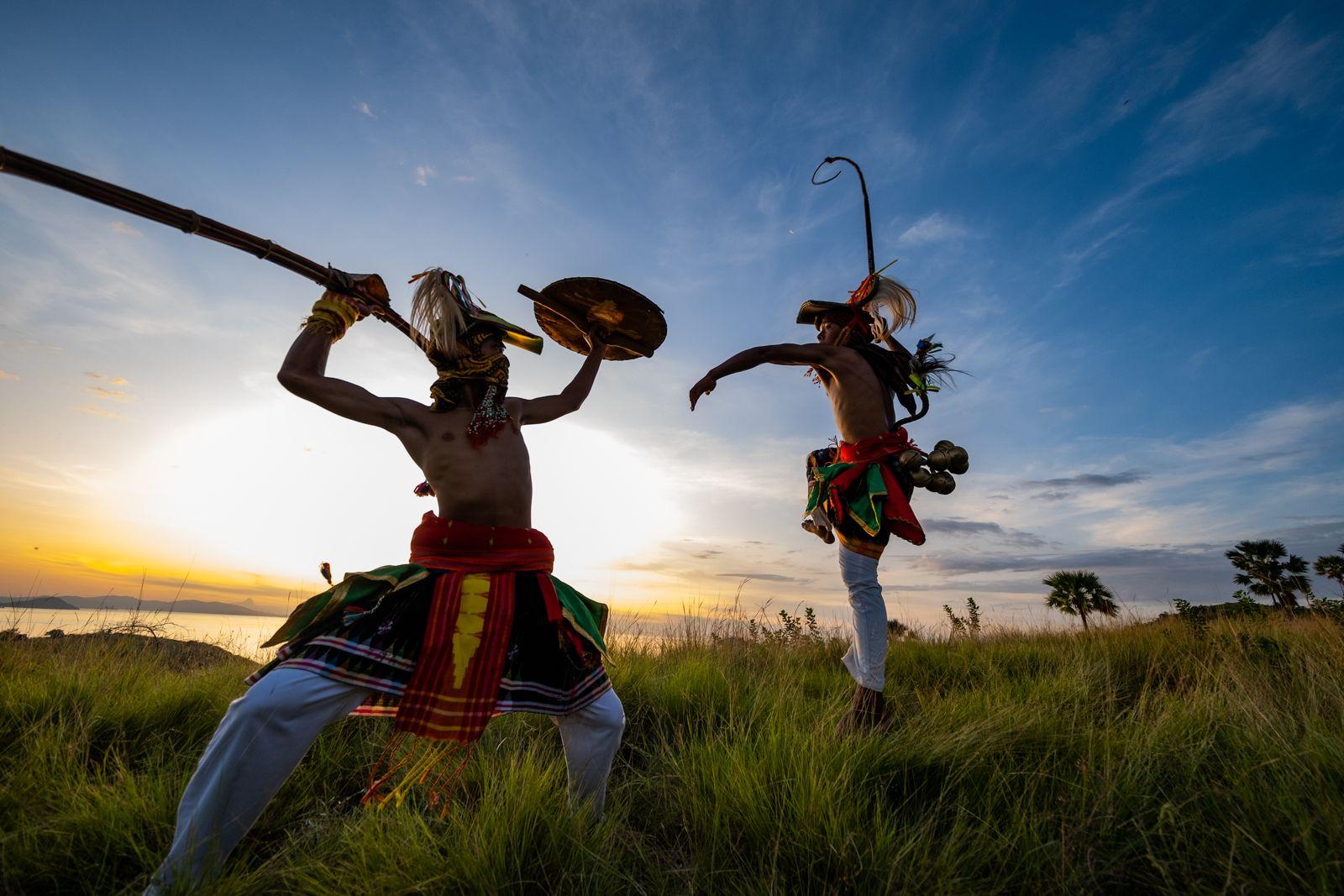
At its heart, Tari Caci is a dramatic duel of strength, agility, and skill, performed by two male warriors in a whip fight. This traditional performance is not only a display of physical prowess but also a celebration of bravery and cultural heritage. Accompanied by lively traditional music and spirited community participation, Tari Caci creates an adrenaline-filled and festive atmosphere that captivates all who witness it.
The duel centers around the warriors and their tools of combat. Each participant wields two essential items: a whip, known as pecut or caci, crafted from rattan and used to strike the opponent, and a shield, called nggiling, made of sturdy buffalo hide to block incoming attacks. The performance follows a structured format, with one warrior taking the role of the attacker, skillfully wielding the whip, while the other defends with the shield, attempting to counterattack. This measured exchange highlights not only the warriors’ physical strength but also their precision and tactical skill.
While the combat may appear fierce, Tari Caci is far from a chaotic fight. It is a highly ritualized performance governed by rules that emphasize sportsmanship and respect. The duel alternates between attack and defense, with the aim of showcasing calculated movements and bravery rather than inflicting harm. Striking the opponent’s body or head earns points, and the performance is judged on the participants’ strength, skill, and composure. Interestingly, if blood is drawn during the duel, it is often seen as a good omen, symbolizing sacrifice and blessings for the community.
The intensity of the duel is heightened by the rhythm of traditional gong and drum (gendang) music, which sets the pace for the performance. Adding to the atmosphere, women from the community perform tandak, a form of chanting and traditional singing, to cheer on the warriors. Their voices energize the duel, blending with the music to create a lively and immersive experience for participants and spectators alike.
More than just a test of skill, Tari Caci is a vibrant cultural gathering that brings the community together. Spectators surround the duel, cheering enthusiastically for their favorite participants and celebrating the spirit of unity and tradition. The performance transcends the competition itself, serving as a reflection of the Manggarai people’s shared values, heritage, and sense of identity.
Costumes: A Symbol of Identity
One of the most captivating elements of Tari Caci is the vibrant and symbolic traditional costumes worn by the participants. Every item of clothing and accessory tells a story, embodying the identity, values, and heritage of the Manggarai people. These costumes not only enhance the visual splendor of the performance but also deepen its cultural significance.
At the center of the warrior’s attire is the striking headdress, known as sangga. This horned adornment is crafted with buffalo horns and symbolic materials, invoking the spiritual and cultural importance of the buffalo in Manggarai tradition. As a sacred animal, the buffalo represents strength, prosperity, and sacrifice, all virtues embodied by the warriors. The headdress adds both a formidable and ceremonial touch to the performers’ appearance, emphasizing their bravery and virility in the duel.
Complementing the headdress is the songke, a traditional Manggarai woven textile worn as a sarong. These intricately patterned garments feature motifs rich in cultural symbolism, representing themes of fertility, protection, and humanity’s connection with nature. The vibrant colors and delicate craftsmanship of the songke reflect the warrior’s alignment with the spiritual and natural world, further grounding the performance in Manggarai cultural heritage.
Adding auditory depth to the performance are the bells and accessories worn by the warriors. Small bells, typically attached to belts or anklets, jingle with each movement, creating a rhythmic and enchanting soundscape that complements the duel’s dramatic exchanges. This unique feature enhances the sensory experience of the performance, making it both visually and audibly immersive.
Even the warriors’ primary tools—the whip and shield—carry ceremonial significance. While they serve as weapons during the duel, they are also ornately decorated to align with the festive and ritualistic nature of Tari Caci. These embellishments transform the combat into a display of art and cultural pride, elevating the tools from utilitarian items to symbols of tradition and ceremony.
The costumes of Tari Caci go far beyond mere adornment; they are visual symbols of Manggarai identity and tradition. Every piece, from the horned headdress to the jingling bells, tells a story of strength, spirituality, and connection, making the performance not just a duel of bravery but also a vivid expression of cultural pride.
Cultural and Spiritual Importance of Tari Caci
Tari Caci is far more than a mere dance or performance; it is a profound expression of the cultural and spiritual identity of the Manggarai people. Rooted in tradition, this dramatic display of strength and skill carries deep meaning that resonates beyond the duel itself, reflecting essential values and beliefs central to Manggarai life.
At its core, Tari Caci symbolizes masculinity and strength, serving as an important rite of passage for young men. The performance provides a stage for warriors to demonstrate their bravery, agility, and readiness to face life’s challenges. Through their participation, they not only display physical competence but also affirm their courage and determination, earning respect and admiration from their community.
Beyond the display of individual prowess, Tari Caci also embodies the principles of harmony and balance. The structured alternation between attacker and defender reflects life’s inherent dualities—victories and hardships, action and reaction. These roles emphasize mutual respect and cooperation, suggesting that strength lies as much in defense and restraint as in the ability to strike. This interplay becomes a metaphor for living in balance and cultivating unity within one's relationships and surroundings.
Another important aspect of Tari Caci is its role as a ritual offering to the divine. The duel is performed as an act of gratitude to the gods, seeking their blessings for abundance, peace, and prosperity. Blood drawn during the performance is often seen as a sacred symbol of sacrifice, believed to bring good fortune and ensure the community’s well-being. Through this spiritual connection, Tari Caci reinforces the Manggarai people's profound relationship with the divine and nature.
Lastly, Tari Caci serves as a celebration of community unity. The performance is a communal event, gathering families, neighbors, and entire villages in a shared moment of festivity, solidarity, and pride. The traditions and values upheld during the duel foster social bonds, reminding participants and spectators of their shared identity and collective heritage. It is a moment where individuals come together, strengthening the spirit of togetherness and the continuity of cultural traditions.
When and Where is Tari Caci Performed?
One of the most prominent occasions to witness Tari Caci is during the Penti Festival, the Manggarai people's traditional harvest celebration. This festival is a time to give thanks for the year’s blessings and honor ancestral spirits through ceremonies and communal activities. Tari Caci takes center stage as a powerful expression of gratitude and a plea for future prosperity, connecting the community through its vibrant and symbolic performance.
The dance is also performed at weddings and initiation ceremonies, where it serves to bless the occasion and infuse it with the values of courage, strength, and unity. These life events are pivotal moments for individuals and families, and Tari Caci ensures they are celebrated in a way that preserves tradition while bringing joy and meaning to the participants.
In recent years, cultural performances for visitors have provided new opportunities to experience Tari Caci. In hubs like Ruteng, the capital of Manggarai, or Labuan Bajo, the gateway to Komodo National Park, tourists are introduced to this fascinating tradition as part of cultural showcases. These performances not only entertain but also educate visitors about the deep cultural and spiritual significance of Tari Caci, offering a glimpse into the heart of Manggarai heritage.
Why You Should See Tari Caci
Tari Caci is a captivating experience that encapsulates the spirit, courage, and artistryof Flores Island’s Manggarai culture. Witnessing this ceremonial battle gives visitors an authentic glimpse into the traditions, values, and colorful expressions of East Nusa Tenggara. The dance embodies the energy of unity, the heritage of storytelling, and the timeless strength of the Manggarai people.
Whether you’re an admirer of traditional arts, a lover of Indonesia’s diverse cultures, or a traveler seeking unique experiences, Tari Caci is sure to leave a lasting impression—one filled with the echoes of gongs, the vibrant colors of woven textiles, and the bravery of warriors in motion.
So, the next time you visit Flores or East Nusa Tenggara, make sure to witness Tari Caci, a dance ritual where tradition and valor come alive in thrilling, rhythmic harmony.