




The Hindu-Buddhist kingdoms of Indonesia are inextricably linked to the long history of the Indonesian archipelago. These kingdoms had a profound influence on the development of culture, religion, systems of government, and even the arts and architecture that flourished in Indonesia.
Remains of Hindu-Buddhist kingdoms in Indonesia can still be found and visited easily, from temples like Borobudur Temple, ancient inscriptions such as the Yupa Inscription, as well as archaeological sites scattered across various regions. The existence of this historical heritage not only serves as evidence of past glory but also offers an engaging cultural tourism experience.
The History of Hindu-Buddhist Kingdoms in Indonesia
The Hindu-Buddhist period in Indonesia is estimated to have begun around the 4th century CE, coinciding with increased trade between the Indonesian archipelago and various regions in Asia. These connections fostered the exchange of ideas, beliefs, and technologies, which subsequently blended with local cultures and gave rise to new centers of power in various regions.
Over time, Hindu and Buddhist kingdoms emerged across Sumatra, Java, and Kalimantan, each with its own distinct characteristics. Some are known as maritime kingdoms that controlled international trade routes, while others flourished as religious and cultural centers. The existence of these kingdoms demonstrates that the Nusantara has been an important part of Asia’s trade and civilizational networks for centuries..
The heyday of the Hindu-Buddhist kingdoms in the Indonesian archipelago occurred during different periods, ranging from Kutai in Kalimantan and Sriwijaya in Sumatra to Majapahit in Java. Each kingdom played a significant role in shaping the history of its region while leaving behind a cultural legacy that is still recognized today.
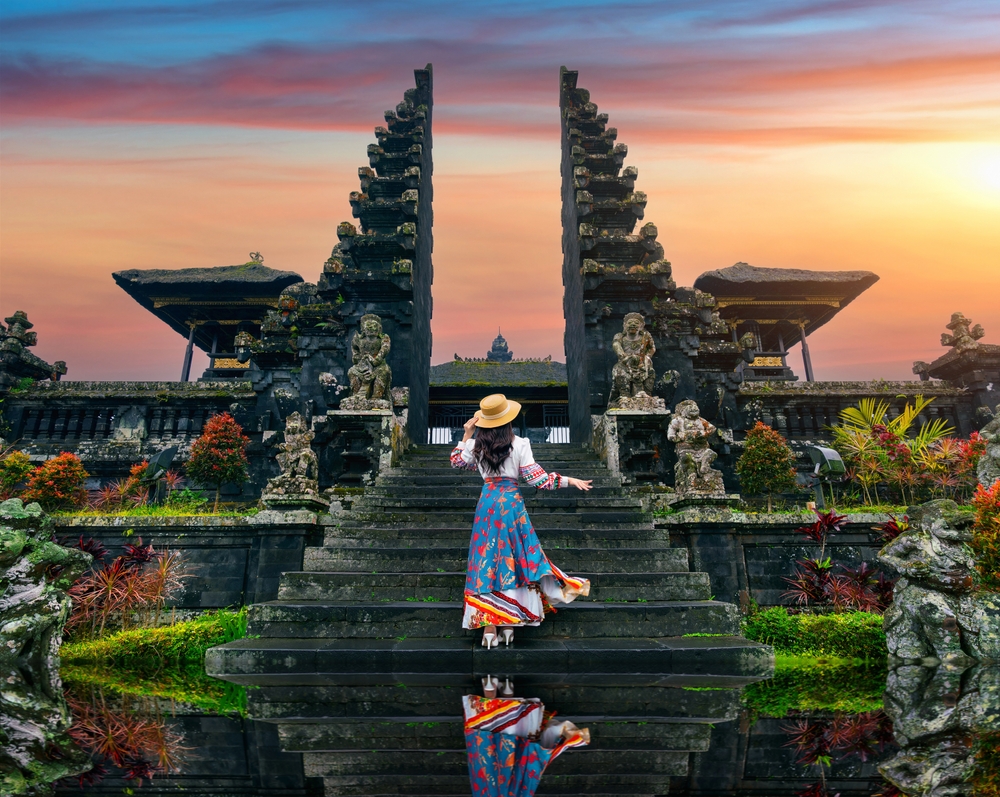
Also Read: Visiting Pura Besakih, the Largest Hindu Temple in Bali
What Are the Hindu-Buddhist Kingdoms in Indonesia?
Here are seven Hindu-Buddhist kingdoms that had a major influence on Indonesian history:
1. Kutai Kingdom
Kutai Kingdom It is the oldest known Hindu kingdom to have ever existed in Indonesia. This kingdom, which flourished around the 4th century CE, is known through a number of Yupa inscriptions—inscribed stone pillars containing information about the royal lineage and the performance of religious ceremonies. The existence of these inscriptions serves as important evidence of the development of Hinduism and early systems of government in the Indonesian archipelago.
Location: The Yupa inscription can be found in Kutai Kartanegara Regency, East Kalimantan.
2. Tarumanagara Kingdom
Tarumanegara was one of the largest Hindu kingdoms to have flourished on the island of Java from the 5th to the 7th centuries CE. The kingdom is best known for King Purnawarman, whose name is recorded in a number of inscriptions. Some important historical artifacts that can still be found include the Ciaruteun Inscription, the Kebon Kopi Inscription, the Tugu Inscription, and the Jambu Inscription, which contain information about the government and infrastructure development of that era.
Location: Most of the archaeological sites are located in the Bogor and Jakarta areas and their surroundings in West Java Province.
3. Kalingga Kingdom
Kalingga Kingdom flourished on the northern coast of Central Java from around the 6th to the 7th centuries CE and is known for the reign of the legendary Queen Shima. Although few physical remnants remain, the kingdom’s existence is documented in various historical records, archaeological findings, and ancient sites discovered within its former territory.
Location: Traces of the Kalingga Kingdom can be found in the Jepara area and several regions in northern Central Java.
4. Sriwijaya Kingdom
Sriwijaya was a maritime Buddhist kingdom that once controlled international trade routes in Southeast Asia from the 7th to the 13th centuries CE. This kingdom left behind a number of important inscriptions, such as the Kedukan Bukit Inscription, the Talang Tuo Inscription, the Telaga Batu Inscription, and the Kota Kapur Inscription. In addition, there are various archaeological sites that demonstrate Sriwijaya’s role as a center of trade and Buddhist education in the Asian region.
Location: Most of the Sriwijaya ruins can be found in Palembang, South Sumatra, as well as in several other areas in Sumatra and the Bangka Belitung Islands.
5. The Ancient Mataram Kingdom
The Ancient Mataram Kingdom is known as one of the kingdoms that produced many monumental architectural works in Indonesia. Generally, these relics take the form of temples with magnificent structures such as Borobudur Temple, Prambanan Temple, Kalasan Temple, Sewu Temple, Plaosan Temple, including various inscriptions that serve as important sources for the history of ancient Java.
Location: The ruins of the Ancient Mataram Kingdom are scattered throughout Yogyakarta and Central Java, particularly in the Sleman, Magelang, and Klaten regions.
6. Singasari Kingdom
The Singasari Kingdom flourished in East Java during the 13th century and is known for important figures such as Ken Arok and Kertanegara. Some of the historical sites that can still be visited today include the Singosari Temple, the Jago Temple, the Kidal Temple, as well as some statues and inscriptions that depict political and religious life during the kingdom’s era.
Location: Most of the Singasari ruins are located in Malang Regency, East Java.
7. Majapahit Kingdom
Majapahit was one of the largest Hindu kingdoms in the history of the Indonesian archipelago, reaching the height of its power in the 14th century. The kingdom left behind many historical sites, such as Candi Tikus, Gapura Bajang Ratu, Candi Brahu, and Kolam Segaran, as well as various artifacts and architectural structures that attest to the advancement of Majapahit civilization during its time.
Location: The center of the Majapahit Kingdom’s heritage can be found in the Trowulan area, Mojokerto Regency, East Java, which is now recognized as one of the most important archaeological sites in Indonesia.
Also Read: 3 Attractions of the Kampung Majapahit Tourism Village, Mojokerto
Explore the Legacy of the Nusantara Kingdoms in Indonesia
The remnants of Hindu-Buddhist kingdoms not only serve as evidence of past glory but also offer fascinating historical and cultural experiences for travelers to explore. From the magnificent temples of Java to the ancient royal sites of Sumatra and Kalimantan, each destination has a unique story that enriches our understanding of Indonesia’s history.
To get a tailored travel recommendation, use MaiA, the travel assistant that’s ready to provide you with inspirational historical and cultural trips, and other intriguing destinations around Indonesia.
For more practical travel, use the Plan Your Trip feature on Indonesia Travel website to create a well-organized itinerary yang lebih terorganisir and get the most experience in exploring the cultural heritage of the Indonesian archipelago.