





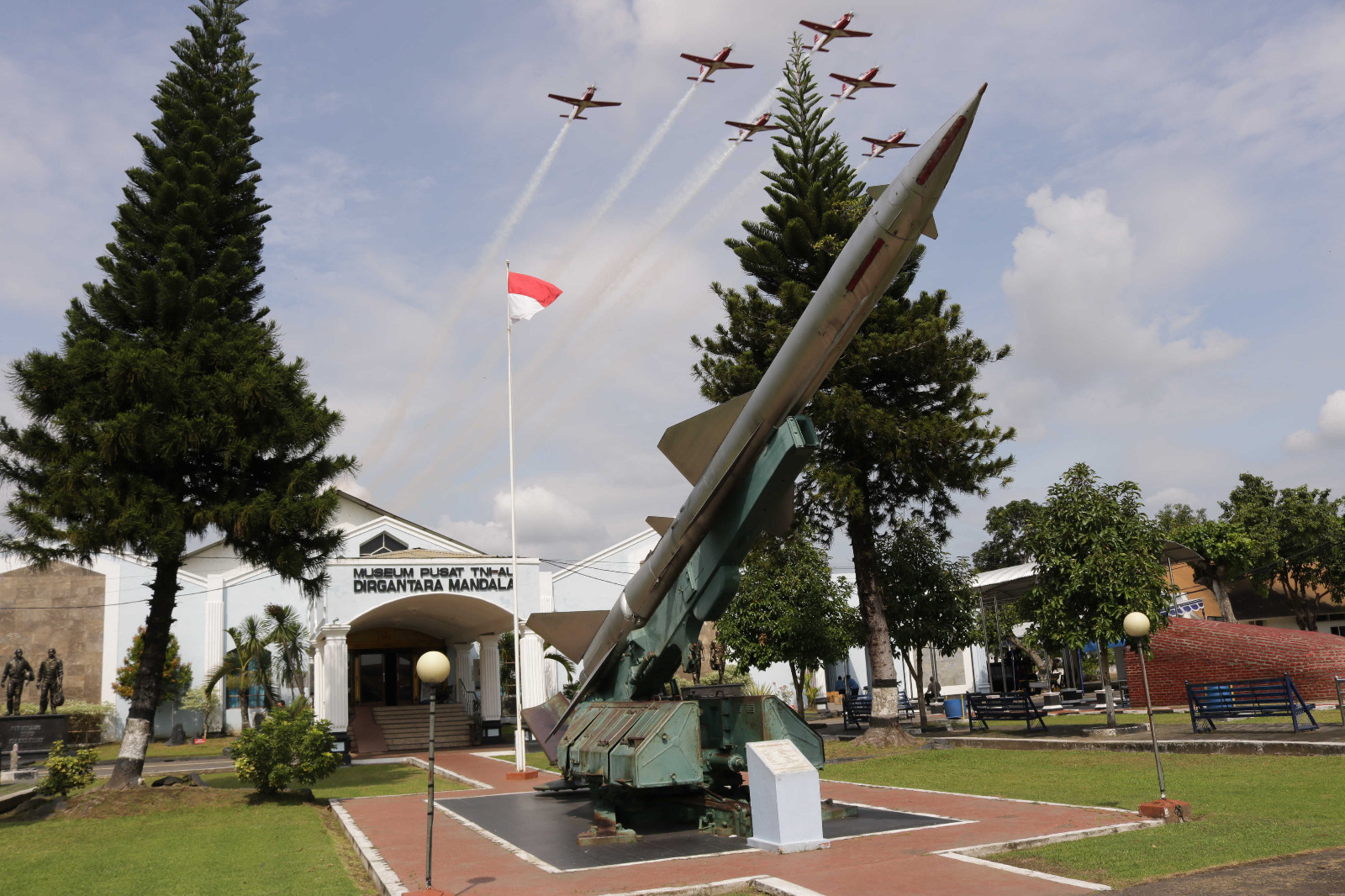
Dirgantara Mandala Museum is a specialized museum dedicated to the history and development of the Indonesian National Armed Forces Air Force (TNI AU). The museum showcases a wide range of artifacts, photographs, dioramas, aircraft, and aerial military equipment that reflect the long journey of Indonesia’s aerospace development from the independence era to the modern age.
Located within the Adisutjipto Air Force Base complex in Banguntapan, Bantul Regency, Yogyakarta, the museum is one of the main destinations for visitors interested in aviation history and Indonesia’s air force struggle.
Museum Type and Management
According to official data from the Ministry of Culture of the Republic of Indonesia, the Dirgantara Mandala Museum is classified as a specialized museum due to its focus on the history of the Indonesian Air Force and national aerospace development.
In terms of museum typology, it is categorized as a Type B museum, although it has not yet fully met all formal national museum standards established by the government.
The museum is owned and managed by the Indonesian Air Force as part of its institutional efforts to preserve, maintain, and convey the historical narrative of Indonesia’s air power to the public.
History of the Dirgantara Mandala Museum
Dirgantara Mandala Museum has a long history rooted in the early initiative of Air Force leadership to preserve and document important activities and events within the Indonesian Air Force.
The first official decision regarding the establishment of the museum was issued through the Minister/Commander of the Air Force Decree Number 491 dated August 6, 1960, which emphasized the importance of historical documentation and the creation of an Air Force museum. The concrete realization of this idea began on April 21, 1967, when the initial organizational structure of the museum was formed.
The museum was officially opened for the first time in Jakarta on April 4, 1969, by Air Force Commander Admiral Roesmin Noerjadin. Due to strategic considerations and the need for a larger space to accommodate the growing collection, the museum was relocated to Yogyakarta on July 29, 1978, when it was designated as the Indonesian Air Force Central Museum “Dirgantara Mandala.”
The museum building was later rehabilitated from the former Wonocatur sugar factory located within the Adisutjipto Air Force Base area. On July 29, 1984, the permanent museum building was officially inaugurated by the Chief of Staff of the Indonesian Air Force, Air Chief Marshal Sukardi.
Collections of the Dirgantara Mandala Museum
The Dirgantara Mandala Museum houses a highly diverse collection related to aviation history and the Indonesian Air Force. These include aircraft, historical photographs, communication equipment, and dioramas depicting aerial combat and military operations.
The main collection categories include:
- Aircraft and replicas, ranging from World War II, era planes to modern aircraft, including types such as the Nakajima Ki-43 and the Consolidated PBY Catalina.
- Historical photographs and documentation, illustrating the development of the Indonesian Air Force and its key milestones.
- Aerial military equipment, such as radar systems, aircraft engines, navigation tools, and aviation gear.
- Dioramas and aircraft models, helping visitors understand historical contexts through chronological visual storytelling.
The museum also displays uniforms, medals, honors, and other memorabilia associated with important figures and significant events in the history of the Indonesian Air Force.
Objectives and Functions of the Dirgantara Mandala Museum
Although the museum does not have a separately published official vision and mission statement, its objectives and functions can be summarized as follows:
Main Objectives:
- To preserve and document the history of the Indonesian Air Force, including its activities, equipment, and institutional development.
- To provide accurate and reliable information for the public, students, academics, and researchers regarding Indonesia’s national aerospace history.
Museum Functions:
- Aviation history education, delivered through curated collections, exhibition narratives, and multimedia documentation.
- Strengthening national values, by fostering appreciation for the contributions and sacrifices of air force heroes and personnel.
- Research and cultural reference, serving as a documentation center for studies on military history and aerospace technology.
Through these functions, the museum plays an important role in safeguarding and introducing Indonesia’s aerospace heritage to present and future generations.
Dirgantara Mandala Museum as a Space for Education and Aerospace Heritage
Dirgantara Mandala Museum is not merely a place for storing historical artifacts, but also an educational space that records the long journey of Indonesia’s aerospace development. Through its aircraft collections, dioramas, and authentic documentation, the museum presents the narrative of air power struggles that have shaped the strength of the Indonesian Air Force to this day.
Its presence in Yogyakarta makes the museum a significant destination for students, researchers, and the general public who wish to understand the strategic role of air power in the nation’s history. With its educational approach and continuously preserved collections, the Dirgantara Mandala Museum makes a major contribution to maintaining collective memory and fostering appreciation for military values, technological advancement, and the spirit of dedication within Indonesia’s aerospace world.