





Indonesia is home to rich cultural diversity, with hundreds of ethnic groups spread across the archipelago. Each community expresses its values and way of life through many forms, including architecture. One of the clearest reflections of this is the traditional Indonesian house, or rumah adat.
More than just a place to live, a traditional Indonesian house represents cultural identity, social structure, and local wisdom shaped by environment and tradition. Each region has its own distinctive style, making every traditional house in Indonesia unique.
What Is A Traditional Indonesian House?
A traditional Indonesian house refers to a traditional dwelling with a specific architectural form unique to a particular region in Indonesia. Each house type is built using local materials and techniques that adapt to the surrounding environment, from coastal areas to mountainous regions.
Beyond its physical structure, a traditional Indonesian house is carefully designed with a clear spatial arrangement and function. These elements often reflect daily activities, communal life, and long-standing traditions that shape how the space is used and understood within the community.
Why Traditional Indonesian Houses Are Unique
A traditional Indonesian house stands out for its strong connection to local culture, environment, and craftsmanship. Each design reflects regional identity, climate adaptation, and the values of the community that built it.
What makes Indonesia traditional houses truly unique is their diversity. From elevated structures to intricate carvings, every house showcases different architectural styles and traditions shaped by generations of local wisdom.
Related Article: The History of North Sumatra: A Journey Through Time
10 Iconic Traditional Indonesian Houses
There are ten iconic examples of traditional Indonesian houses that highlight the richness of local identity across the archipelago.
1. Bolon House, North Sumatra
The Bolon House is a traditional home of the Batak people, known for its large stilted structure and steep roof. It traditionally served as a residence for Batak kings or noble families.
Beyond its size, the Bolon House reflects social hierarchy and communal life. Its elevated design protects against wild animals while symbolizing strength and authority within the Batak community.
2. Rumah Gadang, West Sumatra
Rumah Gadang is easily recognized by its curved roof resembling buffalo horns. It represents the Minangkabau people and their matrilineal social system.
This house functions not only as a home but also as a center for family gatherings and traditional ceremonies. Each section of the house reflects the roles and values upheld by Minangkabau culture.
3. Joglo House, Central Java
The Joglo House is a classic Javanese traditional house distinguished by its tall, tiered roof. It is often associated with nobility and important cultural events.
Its interior layout reflects Javanese philosophy, emphasizing harmony, balance, and respect for social order. Joglo houses are commonly used for ceremonies and formal gatherings.
4. Bali Sakenem House, Bali
The Bali Sakenem House follows traditional Balinese architectural principles rooted in spiritual balance. Rather than a single building, it consists of several structures within one enclosed compound.
Each structure serves a specific purpose, from living spaces to prayer areas. The layout reflects the Balinese belief in harmony between humans, nature, and the spiritual world.
5. Tongkonan House, South Sulawesi
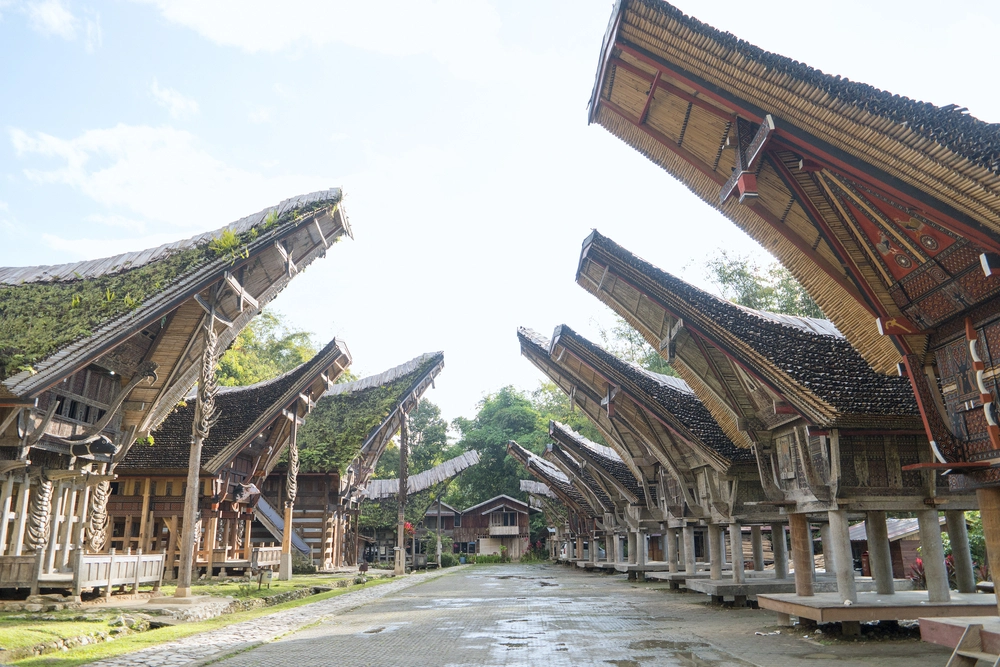
Tongkonan is the traditional house of the Toraja people, famous for its boat-shaped roof and detailed carvings. It stands as a powerful symbol of family lineage.
More than a residence, Tongkonan plays a central role in ceremonial life. Rituals, especially funerals, are closely tied to the presence and status of the house.
6. Dayak Longhouse, Central Kalimantan
The Dayak Longhouse is a long communal dwelling shared by multiple families. Built on stilts, it stretches horizontally and reflects a strong sense of togetherness.
This house represents communal living and cooperation. Daily activities, social interactions, and traditional practices all take place within this shared space.
7. Sasak House, West Nusa Tenggara
The Sasak House is a traditional dwelling of the Sasak people, constructed using natural materials such as bamboo, wood, and clay. Its simple form reflects practicality and local wisdom.
Despite its modest appearance, the house holds deep cultural meaning. Every element, from the roof to the floor, follows customs passed down through generations.
8. Uma Kelada, East Nusa Tenggara
Uma Kelada is a traditional house from Sumba, characterized by its tall roof structure. The design reflects strong spiritual beliefs and respect for ancestors.
The house serves both residential and ceremonial functions. Its vertical form symbolizes the connection between the human world and the spiritual realm.
9. Honai House, Papua
Honai is a small, round house with a thick thatched roof, designed for the highlands of Papua. Its compact shape helps retain warmth in cold mountainous climates.
The house reflects adaptation to the natural environment. Honai also serves as a space for teaching traditions and strengthening community bonds.
10. Baileo House, Maluku
Baileo is a traditional communal house without walls, used for meetings and cultural ceremonies. Its open design symbolizes transparency and unity.
Rather than serving as a residence, Baileo functions as a center for decision-making and social gatherings. It represents the importance of collective values in Maluku society.
Related Article: Banua Tada Traditional House
Where to See Traditional Indonesian Houses Today
Today, traditional Indonesian houses can be found in many parts of the country, either in their original villages or at cultural preservation sites. Some are still lived in by local communities, while others are displayed in cultural villages, museums, and heritage parks.
These places allow visitors to learn about different architectural styles and cultural values without having to travel to every region in Indonesia.
Tips for Visiting Indonesia Traditional Houses
Here are a few tips to keep in mind when visiting Indonesia traditional houses:
- Respect local customs and traditions: Some traditional houses are sacred or used for ceremonies, so it’s important to follow local rules and guidance.
- Dress modestly and appropriately: Wearing respectful clothing shows appreciation for local culture, especially in traditional or ceremonial areas.
- Ask permission before entering or taking photos: Always check with locals or guides before stepping inside or photographing a traditional house.
- Follow guidance from local guides or community members: Listening to explanations helps you better understand the cultural meaning behind each house.
- Be mindful of your surroundings: Avoid touching sacred objects and maintain a respectful attitude during your visit.
Related Article: Honai House: Warm and Meaningful Unique Architecture
Start exploring Indonesia your way, from iconic traditional Indonesian houses like Rumah Gadang in West Sumatra to Tongkonan in South Sulawesi. Each destination offers a chance to experience living traditions and distinctive architecture shaped by generations.
Plan your journey effortlessly with AI Plan Your Trip, where you can manage routes, organize your time, and explore cultural destinations at your own pace. You can also ask MaiA for personalized recommendations, from traditional villages to cultural highlights, so every step of your journey feels seamless.
It’s time to explore Indonesia and discover its rich cultural heritage!