




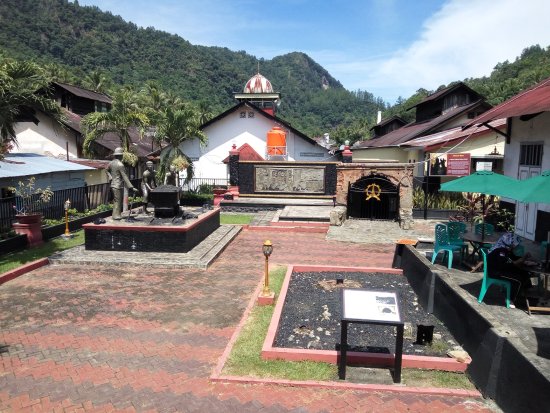
Hole Mine Site Museum Mbah Suro and Infobox is a specialized museum located in Sawahlunto, West Sumatra, Indonesia. The museum is significant as a historical coal mining site and is one of the largest heritage tourism attractions within the Ombilin coal mining area.
Today, the museum also serves as an educational destination that attracts students, researchers, as well as domestic and international visitors.
Getting to Know the Hole Mine Site Museum Mbah Suro and Infobox
Hole Mine Site Museum Mbah Suro and Infobox combines the Infobox Gallery and the Mbah Soero Mine Tunnel as its two main zones. The Infobox Gallery functions as an information center that presents the history of coal mining in Sawahlunto, while the Mbah Soero Mine Tunnel is a former coal mine shaft that has been restored and opened to the public.
This museum stands as a silent witness to the lives of coal miners during the Dutch colonial period, particularly highlighting the harsh working conditions and life challenges faced by the orang rantai, a term used to describe forced laborers who were bound in chains while working to excavate mining tunnels.
Type and Management of the Hole Mine Site Museum Mbah Suro and Infobox
Hole Mine Site Museum Mbah Suro and Infobox is classified as a Specialized Museum with a Type B designation under Indonesia’s national museum classification system. As a specialized museum, it focuses on a single main theme, namely the history of coal mining and its social background in Sawahlunto.
The museum is owned by the Government of Sawahlunto City and managed by the Department of Culture, Historical Heritage, and Museums of Sawahlunto City. The management is responsible for maintaining museum facilities, providing accurate historical information, and organizing educational activities for visitors.
History of Hole Mine Site Museum Mbah Suro and Infobox
Hole Mine Site Museum Mbah Suro and Infobox originates from one of the earliest coal mine tunnels in the Lembah Segar area, which was opened in 1898 during the Dutch colonial era. The tunnel was initially known as Lubang Soegar, named after the Soegar area that was rich in high-quality coal deposits.
The name “Mbah Soero” later developed through local folklore as the name of a mine foreman who was regarded as wise, hardworking, and respected by the miners. Although recent research suggests that Mbah Soero is more of a legendary figure rather than a well-documented historical individual, the name remains widely used to refer to this historic mining site.
Over time, former mining facilities in the area were repurposed for various social uses before eventually being cleared and rebuilt as an information center. In 2008, the museum was officially opened to the public as part of efforts to preserve Sawahlunto’s coal mining heritage.
Vision and Mission of the Hole Mine Site Museum Mbah Suro and Infobox
The vision of the Hole Mine Site Museum Mbah Suro and Infobox is to become an informative, educational, and representative museum in presenting the history of coal mining, particularly to younger generations and tourists.
The museum’s missions include:
- Collecting, preserving, and presenting historical information related to coal mine tunnels.
- Establishing the Museum Situs Lubang Tambang Mbah Soero as one of the leading mining heritage tourism attractions.
- Improving the quality of human resources involved in the management of mining history and heritage.
The Role of the Hole Mine Site Museum Mbah Suro and Infobox
The museum holds significant value in the preservation of Indonesia’s colonial history and mining exploitation. Beyond serving as an educational tourism site, it also provides a space for reflection, allowing visitors to understand the hardships endured by coal miners in the past and the impact of mining activities on the development of Sawahlunto as one of Southeast Asia’s earliest coal mining centers.