

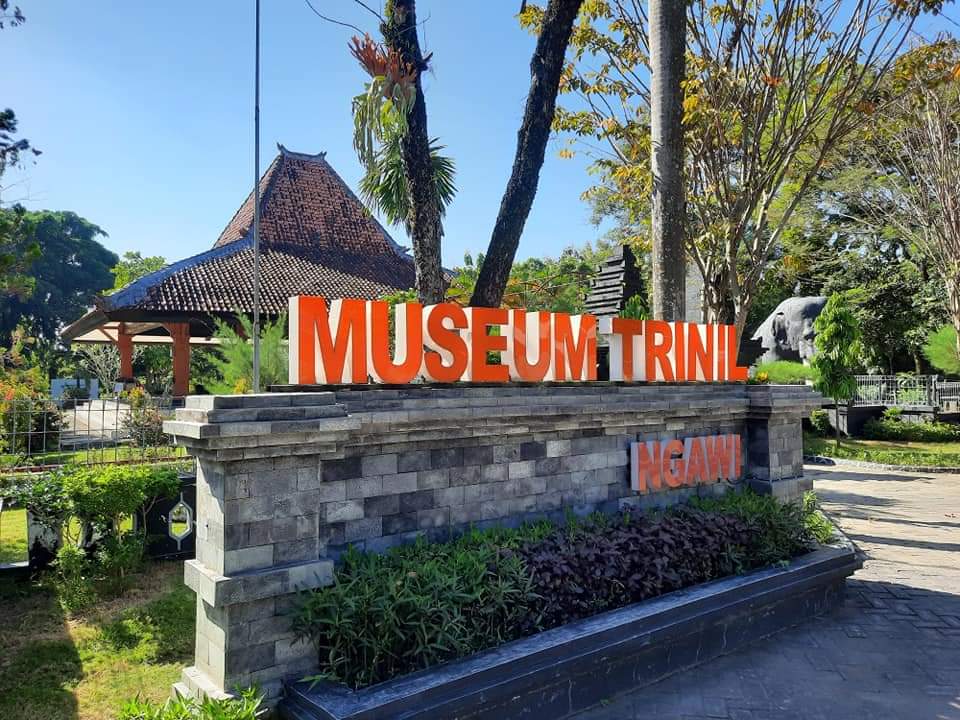
The Trinil Museum is a specialized museum located in Ngawi Regency, East Java, Indonesia, dedicated to prehistoric human history and one of the most significant archaeological sites in Southeast Asia. It preserves and showcases fossils and artifacts discovered at the Trinil Site along the banks of the Solo River, where important evidence of early human evolution was unearthed.
Trinil Museum is a cultural and scientific institution focusing on prehistoric fossils and artifacts related to ancient humans (Homo erectus) and other prehistoric species. The museum offers visitors a chance to explore early life on Java and understand the development of prehistoric humans over millions of years.
Located in Dusun Pilang, Kawu Village, Kedunggalar District, about 15 km from Ngawi town center, the museum stands on the former property of local fossil collector Wirodiharjo, near the Solo River where the first discoveries were made.
Type and Management Museum
The museum is categorized as a specialized museum (Type C) that focuses on prehistoric heritage. Its collection includes fossils of early humans, ancient mammals, and other prehistoric remains alongside educational dioramas and descriptions that help explain the context of these discoveries.
The Trinil Museum is owned by the Ngawi Regency Government and managed by the Department of Education and Culture of Ngawi Regency in collaboration with the Cultural Preservation Center Region XI East Java. This organization is responsible for collection care, exhibition curation, visitor services, and educational programs for students, researchers, and tourists.
History of Trinil Museum
Trinil is historically linked to the groundbreaking discoveries made by Dutch physician and paleontologist Eugene Dubois in 1891 and 1892, when he found skull fragments, teeth, and other fossils along the banks of the Solo River. These remains were later named Pithecanthropus erectus (Homo erectus), recognized as one of the earliest known hominin species.
Locally, a resident named Wirodiharjo began collecting fossils scattered along the riverbank starting in the mid-20th century. His extensive collection inspired the local government to establish a formal museum.
On November 20, 1991, the Trinil Museum was officially inaugurated by the then Governor of East Java, Soelarso, marking the 100th anniversary of the first Homo erectus discovery at Trinil.
Collections Museum
The museum’s extensive collection includes:
- Early human fossils such as Pithecanthropus erectus.
- Fossilized remains of prehistoric animals including ancient elephants (Stegodon), buffalo, and giant shell fossils.
- Dioramas and interactive educational displays detailing prehistoric ecosystems.
These exhibits provide visitors with a vivid understanding of how early humans and animals lived and adapted in Java millions of years ago.
Vision Museum
Trinil Museum aims to be a leading center for prehistoric heritage education and preservation in Indonesia, making the remarkable legacy of early humans accessible to both local communities and international visitors.
Mission Museum
The museum’s mission includes:
- Preserving and protecting prehistoric fossil collections for future generations.
- Presenting educational exhibits that explain important discoveries in paleontology.
- Promoting public understanding of early human evolution and prehistoric life.
- Supporting research and academic collaboration in the fields of anthropology and paleontology.
Educational and Social Role
Trinil Museum plays an important role as an educational destination where students, researchers, and tourists can learn about prehistoric life and evolutionary history. It enhances appreciation of Indonesia’s ancient past and contributes to cultural tourism in East Java.