







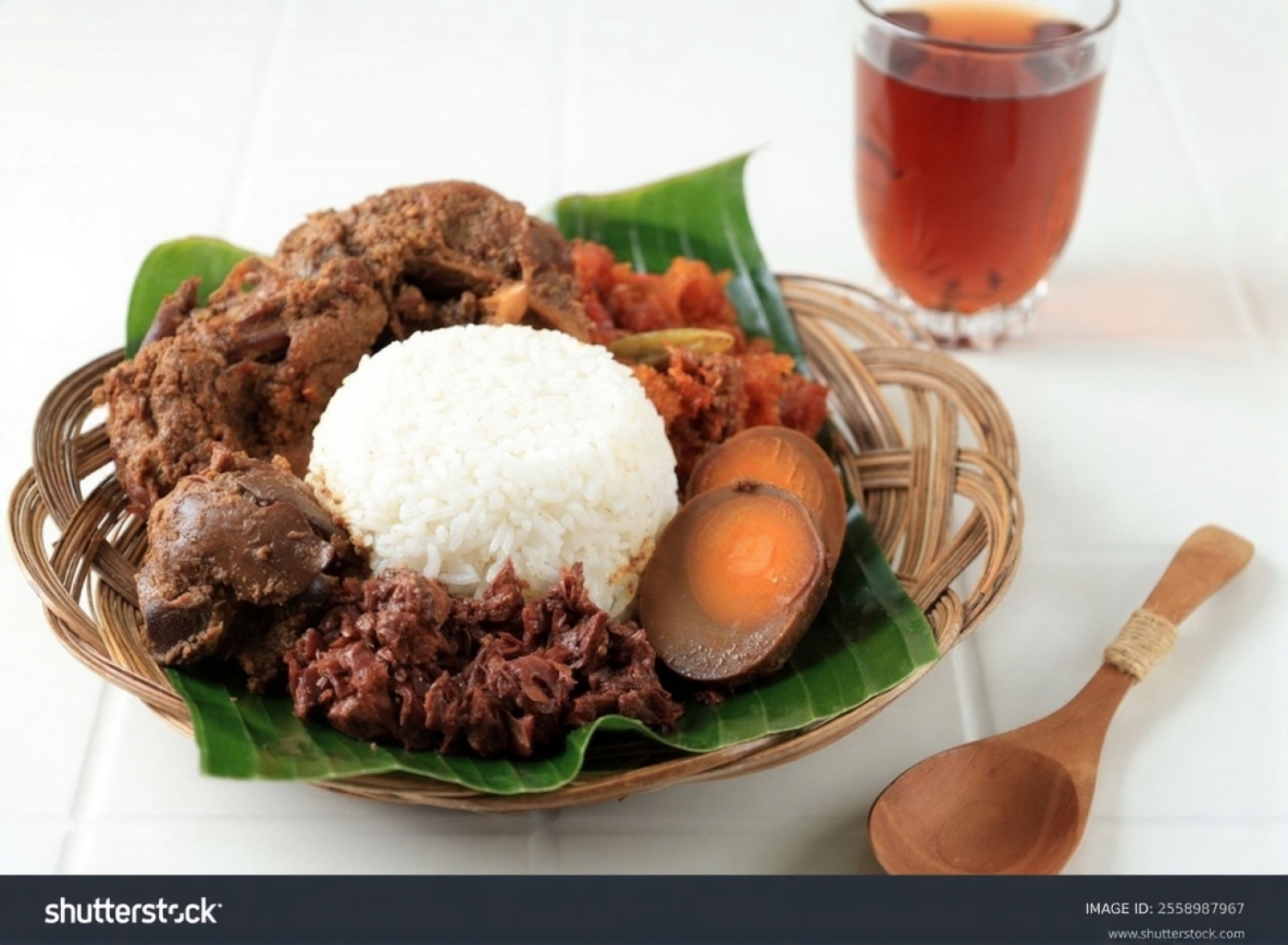
Gudeg
Gudeg is far more than just food; it is a culinary symbol, a cultural identity, and a profound representation of the philosophy of life held by the people of Yogyakarta. This dish, famously known as "slow-cooked young jackfruit," has become an inseparable icon of the Student City, making it a mandatory souvenir for every visitor.Origin and PhilosophyThe history of Gudeg is thought to date back to the establishment of the Islamic Mataram Kingdom in the Mentaok forest (now Yogyakarta) in the 16th century. When workers struggled to find ingredients, they utilized the abundant resources available: young jackfruit (gori), melinjo leaves, and coconut.
They cooked these in large cauldrons until the mixture became thick and tender. The name "Gudeg" itself is believed to derive from the Javanese word "hangudeg" (to stir), referring to the intensive, hours-long stirring process during preparation.
The philosophy embedded in Gudeg is deeply rooted in Javanese culture. The time-consuming cooking process (typically 4 to 12 hours) symbolizes patience and meticulousness (alon-alon asal kelakon, slowly but surely achieving the goal). The dominant sweet flavor represents the gentleness and hospitality of the Yogyakarta people.The Unique Cooking ProcessMaking Gudeg is an art that demands tremendous patience. The main ingredient is young jackfruit (gori), which is cut into pieces and cooked in thick coconut milk along with aromatic spices such as shallots, garlic, coriander, galangal, and bay leaves.
The secret to Gudeg's distinctive reddish-brown color lies in the addition of teak leaves (daun jati). The teak leaves are thrown into the cauldron during the boiling process, releasing a natural dye that permeates the young jackfruit.
This process is carried out over low heat, often overnight, until all the coconut milk evaporates and the spices are perfectly absorbed, rendering the jackfruit incredibly tender and soft.Varieties of GudegAlthough the sweet taste is its hallmark, Gudeg has several variations adapted for different preferences and storage needs:
Gudeg Kering (Dry Gudeg): This is the most popular variant, ideal for take-away souvenirs. It is cooked until the coconut milk is completely dry, making it more preserved. The texture is dense, and the sweet flavor is more concentrated.Gudeg Basah (Wet Gudeg): This version still contains thick coconut milk gravy (areh), giving it a moist texture. It is usually served immediately after cooking at local eateries.Gudeg Manggar: A unique variant that uses young coconut flower (manggar) instead of young jackfruit. This Gudeg has a crunchier texture and is typically found in the Bantul area.The Perfect AccompanimentsGudeg is served as a delicious complete meal called Nasi Gudeg Komplit (Complete Gudeg Rice). The essential accompaniments include:White Rice: Serving as the main carbohydrate.Krecek: Beef skin crackers cooked in coconut milk and chili until spicy, creating a perfect contrast to the Gudeg's sweetness.Ayam Opor or Ayam Suwir: Free-range chicken cooked in a yellow coconut milk broth.Telur Pindang: Chicken eggs boiled with spices and onion skins, giving them a dark brown color and savory flavor.Areh: A thick, savory white or sweet brown coconut milk sauce drizzled over the Gudeg.
Yogyakarta's Gudeg is a unique taste experience, sweet, savory, and lightly spicy from the krecek creating a soft harmony of flavors that leaves a sweet memory of the warmth of Yogyakarta City.