




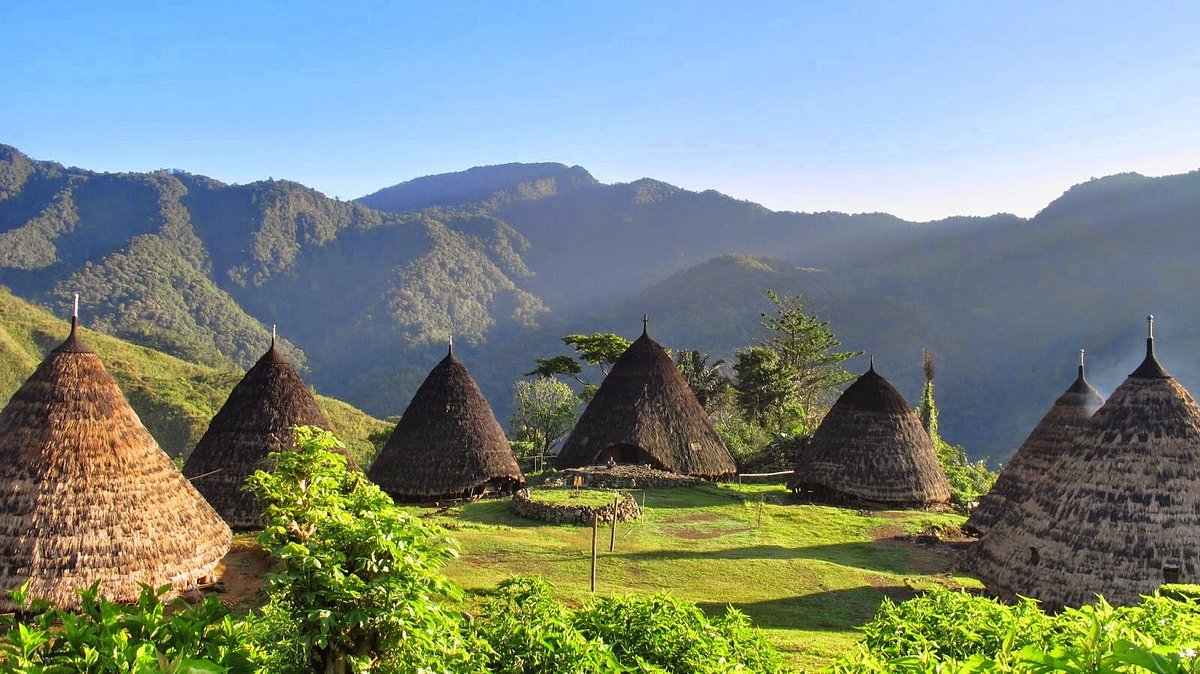
Indonesia is not only famous for its natural beauty but also for its rich cultural heritage passed down through generations. Amid rapid modernization, some traditional villages continue to preserve their ancestral customs. One of the most remarkable is Wae Rebo Village, a traditional settlement located in West Manggarai, East Nusa Tenggara, near Labuan Bajo.
Hidden deep within the mountains, Wae Rebo Village offers serenity, cultural authenticity, and breathtaking scenery. Its isolated location has earned it the nickname “the land above the clouds,” making it a dream destination for travelers seeking meaningful cultural experiences.
1. One of the Highest Villages in Indonesia
Wae Rebo Village sits at an altitude of approximately 1,088 meters above sea level. Surrounded by lush green hills, the village enjoys cool temperatures and frequent morning mist, creating a mystical and peaceful atmosphere.
2. Home to Seven Main Houses
The village is known for its seven iconic traditional houses called Mbaru Niang. These cone-shaped houses consist of five levels, each serving a specific function—from living space to food storage and ancestral offerings. Each house accommodates several families living together harmoniously.
3. A Long and Adventurous Journey
Reaching Wae Rebo Village requires effort and determination. From Labuan Bajo, travelers journey about five hours to Denge Village, followed by a three-hour trek through hilly terrain. Though challenging, the journey itself is part of the unforgettable adventure.
4. Visiting the Elder’s House
Upon arrival, visitors are welcomed into the main house, Niang Gendang, where they participate in the Waelu’u ceremony to seek ancestral permission. Guests are also served traditional Flores coffee. Staying overnight allows deeper interaction with the local community.
5. Descendants of the Minangkabau
Despite its location in Flores, the people of Wae Rebo believe they descend from the Minangkabau of West Sumatra. Their ancestor, Empo Maro, migrated to Flores generations ago. Over time, their identity merged with Manggarai traditions.
6. The Sacred Penti Ceremony
The Penti ceremony is an annual ritual marking the Manggarai New Year. It is a moment of gratitude to ancestors for blessings received and prayers for prosperity in the coming year. Rituals are performed to purify the village and its people.
7. A UNESCO World Heritage Site
Wae Rebo Village gained international recognition in 2012 when it was listed as a UNESCO Cultural Heritage site. The unique Mbaru Niang architecture also received the prestigious Aga Khan Award for Architecture.
Wae Rebo Village is more than a tourist destination—it is a living testament to Indonesia’s cultural resilience. Every tradition, ritual, and structure reflects deep ancestral wisdom.
For travelers visiting Labuan Bajo, exploring Wae Rebo Village offers a once-in-a-lifetime experience that blends nature, culture, and spiritual tranquility.