





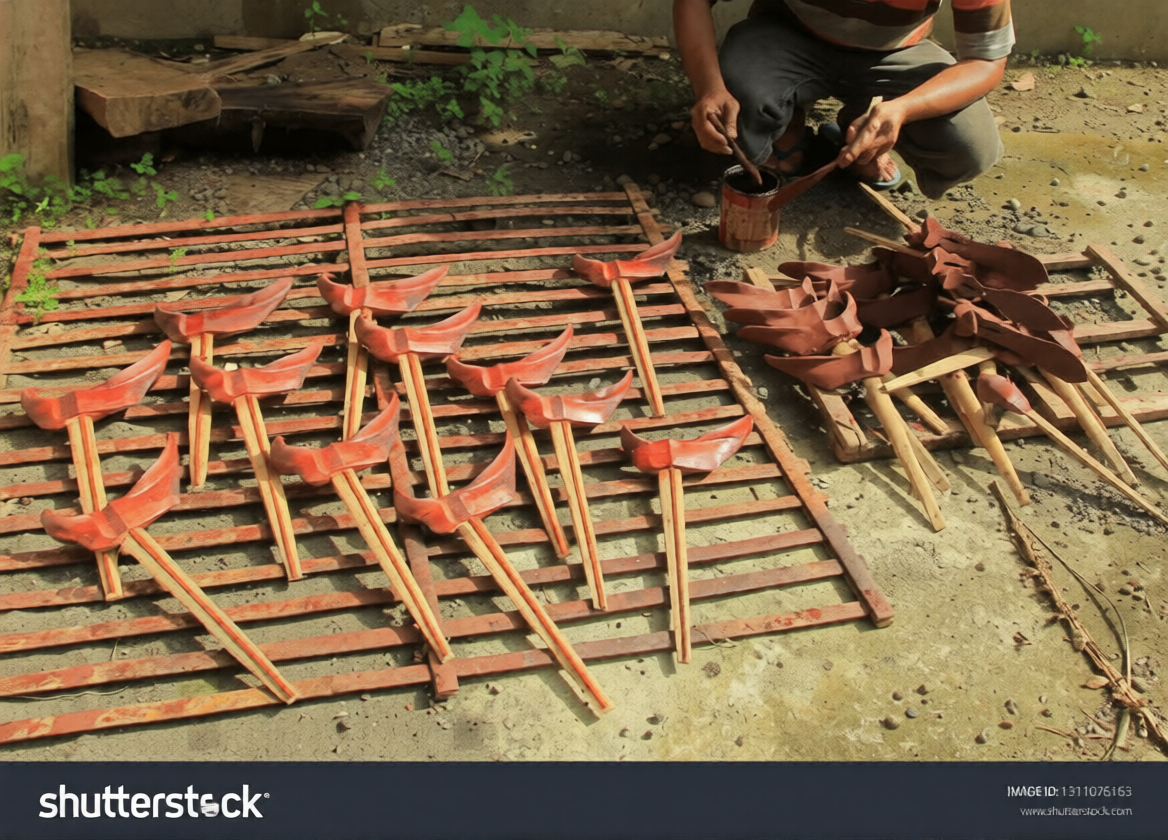
The Indonesian kris is one of the most iconic cultural heritages of Indonesia. Inscribed by UNESCO on the Representative List of the Intangible Cultural Heritage of Humanity, the kris is internationally recognized as a symbol of aesthetics, spirituality, and cultural identity.
That recognition affirms that the kris is not merely a historical object, but a living cultural heritage that continues to be practiced and valued by Indonesian society. More than a traditional weapon, the kris is understood as a cultural object rich in philosophical and symbolic meaning.
Its existence reflects the relationship between humans, nature, belief systems, and social structures. Each kris demonstrates not only a high level of metalworking craftsmanship, but also embodies profound social and spiritual values embedded in its form.
History and Development of the Kris
The origins of the kris are believed to date back to the island of Java around the 10th century, from where it spread across various regions of Southeast Asia. Its development occurred through long-standing cultural interactions, resulting in diverse regional characteristics while maintaining its core identity.
The kris is distinguished by its asymmetrical blade and intricate pamor patterns, making it not only a functional object but also a symbol of social status, honor, and spiritual power. The creation of a kris involves complex traditional metalworking techniques that have been passed down through generations.
These skills are preserved by master craftsmen known as empu, who are highly respected for their ability to forge blades of exceptional technical quality and deep philosophical meaning. The crafting process is both a physical and spiritual endeavor, reflecting the cultural values embedded in the tradition.
Philosophical Meaning and Cultural Values
The kris carries multiple layers of cultural significance. Beyond its physical form, it is regarded as a sacred object believed to possess symbolic and spiritual qualities. In many Indonesian traditions, the kris is associated with protection, good fortune, and harmony, and is often used in ceremonial and ritual contexts.
The pamor patterns on the blade are not merely decorative elements. Each pattern holds specific symbolic meanings and is believed to influence the character and spiritual nature of the kris. The diversity of pamor reflects Indonesia’s rich traditional knowledge, encompassing cosmological concepts, philosophical thought, and local wisdom passed down through generations.
The Role of the Empu in Preserving the Kris Tradition
The empu play a central role in safeguarding the kris tradition. They are not only experts in traditional metallurgy, but also custodians of historical knowledge, literature, and ancestral values. During the forging process, ritual practices are often performed to imbue the kris with spiritual significance, highlighting the inseparable link between craftsmanship and belief.
In the modern era, the number of active empu has declined significantly. This presents a major challenge in preserving the tradition, particularly in ensuring the transmission of knowledge and skills to younger generations so that the cultural continuity of the kris can be maintained.
The Kris in the Modern Cultural Context
Although the role of the kris in everyday life has evolved, it remains an integral part of various cultural practices. The kris is still used in traditional wedding ceremonies, serves as a symbol of honor in formal occasions, and is preserved as an important cultural artifact in museums and educational institutions.
UNESCO recognition has elevated the Indonesian kris onto the global stage, increasing international appreciation for this unique cultural tradition. The Indonesian kris is not merely an ancient artifact, but a symbol of intangible cultural heritage that reflects the nation’s identity, history, and spiritual values. Through continuous preservation efforts, the kris is expected to remain a living and relevant heritage for present and future generations.