

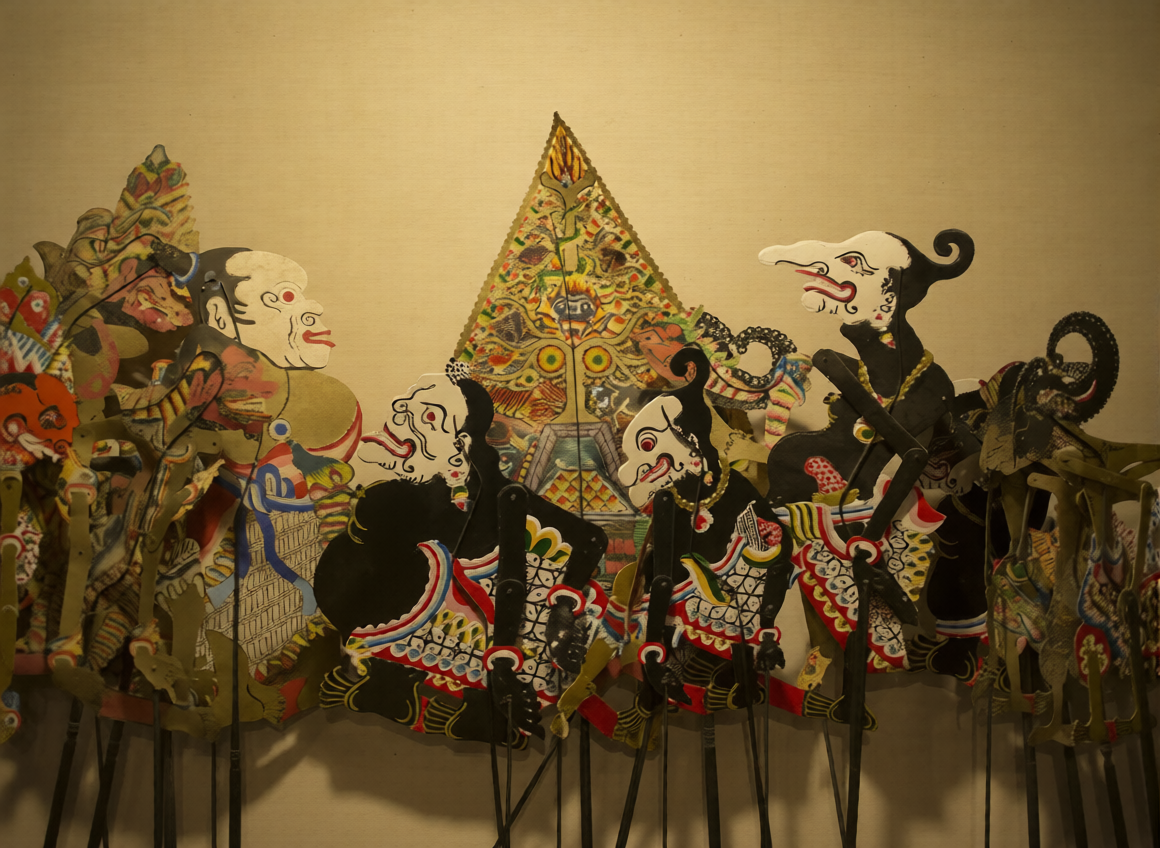
Wayang Kulit was designated by UNESCO as a Masterpiece of the Oral and Intangible Heritage of Humanity in 2003. This recognition was later reinforced by its inclusion in the Representative List of the Intangible Cultural Heritage of Humanity in 2008. The designation affirms that wayang is not merely a form of performing art, but a living cultural heritage that embodies educational values, philosophy, and the cultural identity of Indonesian society.
Behind the screen and the play of shadows lie epic stories, moral teachings, and local wisdom that have been passed down from generation to generation for centuries. Through the role of the puppeteer, the accompaniment of gamelan music, and symbolic characters, the performance becomes a profound and meaningful reflection on life.
The Origins of Wayang in the Nusantara Tradition
Wayang kulit is part of an ancient storytelling tradition of the Indonesian archipelago that originated on the island of Java. Renowned for its intricately crafted puppets and complex musical accompaniment, this art form has evolved over approximately ten centuries, flourishing both in the royal courts of Java and Bali and within rural communities.
Over time, wayang kulit developed not only as a form of entertainment, but also as a medium for education, moral instruction, and ritual practice. Stories drawn from the epics Ramayana and Mahabharata were creatively adapted to align with local social contexts, beliefs, and cultural values, forming a distinctly Indonesian identity.
As the tradition spread to other regions such as Lombok, Madura, Sumatra, and Kalimantan, it gave rise to diverse local performance styles. These variations differ in visual design and musical accompaniment, while preserving the philosophical essence that lies at the heart of wayang.
Iconic Characters and Their Meanings
Each performance presents a wide range of characters that represent the traits and dynamics of human life. These figures are not merely fictional characters, but symbols of social and spiritual values.
Among the most well-known characters are Arjuna, who embodies wisdom and self-control; Semar, a symbol of honesty and the wisdom of common people; Rahwana, who represents ambition and greed; and Hanoman, who signifies loyalty and courage. Through these characters, audiences are invited to reflect on the consequences of human choices and actions.
Philosophy and Life Values in the Performance
Wayang kulit is rich in philosophical meaning that reflects the worldview of Javanese society. The performance portrays the eternal struggle between good and evil, as well as humanity’s journey toward inner and outer balance.
The puppeteer plays a central role as both the narrator and the conveyor of moral messages. Beyond animating the puppets, the puppeteer weaves advice, social commentary, and spiritual reflection into the storyline, making the performance relevant to everyday life.
The Role of Gamelan and the Puppeteer
Gamelan music is an essential element that shapes the atmosphere of the performance. The sounds of kendang, gong, saron, and gender blend harmoniously to mark emotions, conflicts, and transitions between scenes. Music serves not only as accompaniment, but also as a symbolic language that strengthens the narrative.
The puppeteer is required to master a wide range of skills, including traditional literature, vocal techniques, and philosophical understanding. These skills are passed down through generations and play a crucial role in the preservation of wayang as a cultural heritage.
Experiencing Wayang Kulit in Different Regions
In Jakarta, performances can be enjoyed at the Wayang Museum in Kota Tua, Makutharama Puppet Studio, and Taman Mini Indonesia Indah, which regularly hosts cultural performances. These venues offer educational and accessible experiences for both first-time audiences and tourists.
In Yogyakarta, Museum Sonobudoyo and the Yogyakarta Palace are key destinations for experiencing authentic classical performances. Meanwhile, in Solo, Wayang Orang Sriwedari presents stories from the wayang tradition in the form of traditional theater, while remaining deeply rooted in wayang symbolism and values.
Preserving Wayang Kulit in the Modern Era
Amid technological advancement and changing lifestyles, the sustainability of wayang kulit faces significant challenges. Interest among younger generations has declined, while modern entertainment continues to dominate. Nevertheless, preservation efforts persist through education, cultural festivals, digital documentation, and performance innovations to ensure continued relevance.
Preservation is not solely about maintaining the form of the performance, but also about safeguarding the values, knowledge, and philosophy it conveys. Through these efforts, wayang continues to live on as a dynamic and enduring cultural heritage.