For Muslims, Eid al-Adha is a religious holiday that they always look forward to. This time, which coincides with the arrival of the ‘Hajj season’, is the perfect moment to foster compassion and care for others. Eid al-Adha is synonymous with slaughtering sacrificial animals such as cows, goats, or sheep, and distributing the meat to the underprivileged.
Not only synonymous with slaughtering sacrificial animals, but there are various unique traditions during the celebration of Eid al-Adha in several regions #InIndonesiaAja.
1 | Apitan Tradition in Semarang
The Eid al-Adha tradition of Apitan is commonly celebrated in Semarang. This Apitan tradition is a form of gratitude for the sustenance in the form of crops given by the Almighty. In Semarang, this tradition is usually filled with recitation of prayers followed by a procession of agricultural products, livestock, and later the paraded agricultural products will be taken in a scramble by the local community. This tradition is believed to be a habit of the Wali Songo in the past as a form of expression of gratitude at the Eid al-Adha celebration. Not only gunungan in the form of agricultural products or livestock parades, anyone who witnesses this Apitan tradition will also be presented with typical local wisdom entertainment. Wow, it looks really interesting!
2 | Manten Sapi Tradition in Pasuruan
The Manten Sapi tradition is a tradition carried out by the people of Pasuruan. This tradition is a form of gratitude and respect for the sacrificial animals that will be slaughtered. Interestingly, the cow that will be sacrificed will be dressed up as beautiful as possible like a bride. The animal is also draped with seven flowers, then wrapped in a shroud, turban, and prayer mat. In this tradition, the shroud is a sign of the purity of the person who sacrifices. After being dressed up, all the cows will be paraded to the local mosque to be handed over to the sacrificial committee. To make it even more memorable, the meat will usually be processed and eaten together. What a sense of togetherness!
3 | Grebeg Gunungan Tradition in Yogyakarta

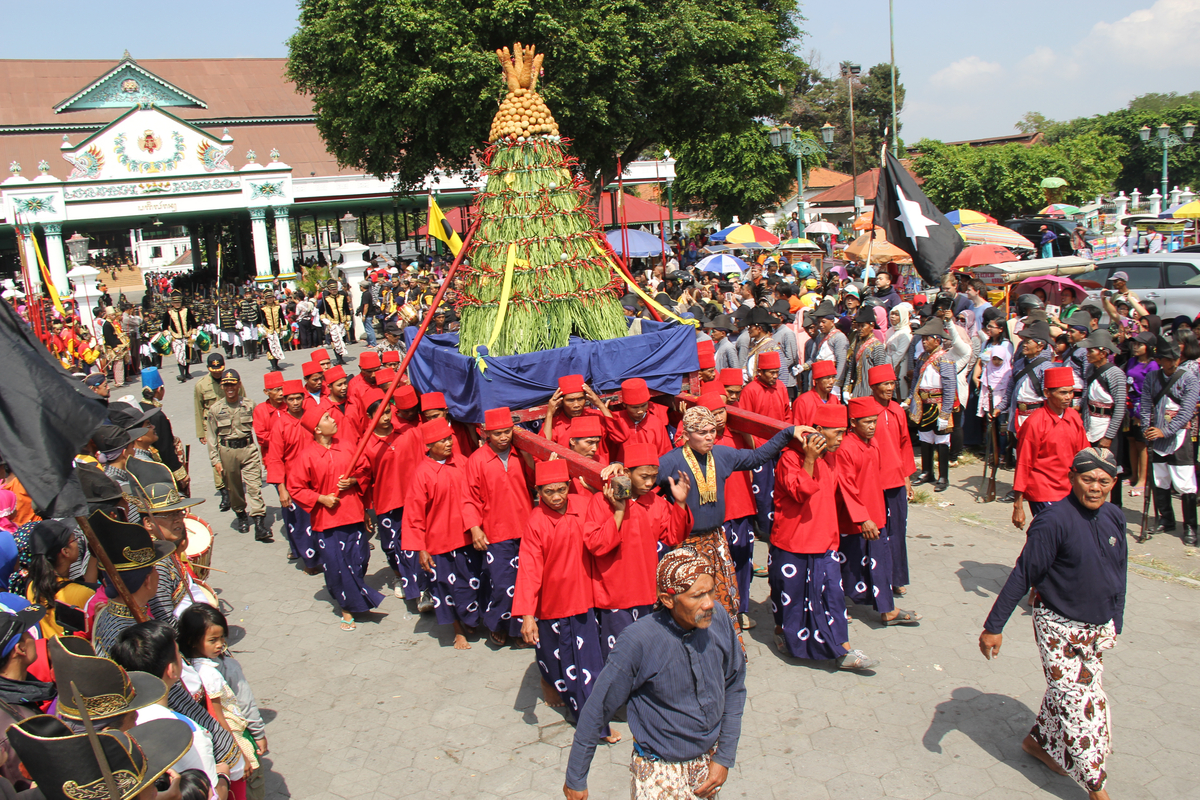
The Grebeg Gunungan tradition celebrated by the people of Yogyakarta is similar to the Apitan tradition from Semarang. The Muslims of Yogyakarta will parade the crops from the palace grounds to the Gede Kauman Mosque. The procession of crops consists of three gunungan, which is composed of a series of vegetables and fruits. In Yogyakarta, this tradition is held every Islamic holiday. Grebeg Syawal is held during Eid al-Fitr, while Grebeg Gunungan is held during Eid al-Adha. Local people believe that if they manage to take the crops arranged in the form of gunungan, it can bring sustenance.
4 | Gamelan Sekaten Tradition in Cirebon
There is a tradition of celebrating Eid al-Adha from Cirebon that is believed to be the preaching of Sunan Gunung Jati as the spreader of Islam in the land of Cirebon. This tradition is called the Gamelan Sekaten tradition which is always sounded every celebration of Islamic religious holidays, namely, Eid al-Fitr and Eid al-Adha. The sound of Gamelan around the Kasepuhan Cirebon Palace area is a sign that Muslims in Cirebon are celebrating the day of victory. The Gamelan was sounded shortly after the sultan of Kasepuhan Palace came out of the Great Mosque of Sang Cipta Rasa.
5 | Meugang Traditions in Aceh

When an Islamic holiday is coming up, many meat vendors will be selling fresh meat that is hung up and can be purchased by the people of Aceh. The Meugang tradition, which comes from the word Makmeugang, is a tradition that is very familiar to the people of Aceh, especially during religious holidays. The Meugang tradition dates back hundreds of years and is synonymous with eating beef or buffalo together with a variety of dishes. The history of Meugang dates back to the time of the kingdom of Aceh where animals were slaughtered and distributed free of charge to the community. This tradition is an expression of gratitude for the prosperity of the land of Aceh and until now it is still preserved by all Acehnese people when welcoming Muslim holy days.
Well, Pesona Friend, it turns out that Indonesia really has a variety of traditions and cultures that are philosophical and full of deep meaning. Are you curious about the diversity of cultures in Indonesia? Let's be more proud to travel #InIndonesiaAja.