




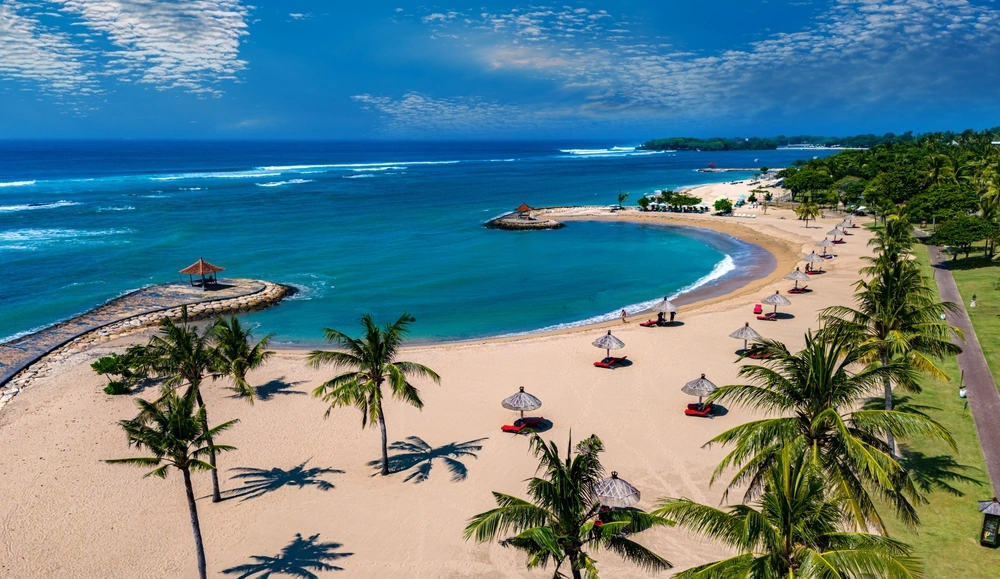
Bali
Renowned as the Island of the Gods, Bali seamlessly combines breathtaking natural beauty, rich cultural heritage, and the warm hospitality of its people.
Bali is one of Indonesia's provinces, located between the islands of Java and Lombok. Known as the Island of the Gods, Bali is a popular travel destination celebrated for its beautiful beaches, diverse natural landscapes, and rich cultural heritage that continues to be preserved today.
Bali at a Glance
Capital: Denpasar
Location: Between Java and Lombok, bordered by the Bali Sea to the north, the Lombok Strait to the east, the Indian Ocean to the south, and the Bali Strait to the west.
Area: Approximately 559,001.27 hectares of land and 915,254.10 hectares of coastal waters, covering a total area of around 1,474,255.37 hectares.
Administrative divisions: 8 regencies and 1 city
Nicknames: Island of the Gods and Island of a Thousand Temples
Main ethnic groups: Balinese, Bali Aga, Bali Majapahit, Nyama Selam, and Sasak
Regional language: Balinese
Geographical Location of Bali
Geographically, Bali lies between 8°3′38″ and 8°50′56″ South latitude and 114°25′53″ and 115°42′39″ East longitude. The island stretches approximately 153 kilometers from east to west and 112 kilometers from north to south.
Bali is bordered by the Bali Sea to the north, the Indian Ocean to the south, the Bali Strait to the west, and the Lombok Strait to the east. The province has a coastline measuring approximately 633.35 kilometers.
Bali's natural landscape features volcanoes, rivers, and lakes. Its two major volcanoes are Mount Batur and Mount Agung.
Standing at 3,148 meters above sea level, Mount Agung is the highest point in Bali and experienced a major eruption in 1963. Volcanic activity has contributed to fertile soil in several parts of the island, supporting agricultural activities.
History of Bali
Before becoming a separate province, Bali was part of the Lesser Sunda Province, along with Lombok, Sumbawa, Sumba, Flores, and Timor.
Bali was officially established as a province in 1958, with Singaraja serving as its capital before the provincial administration was relocated to Denpasar in 1960.
Bali Province also includes several smaller islands, such as Nusa Penida, Nusa Lembongan, Nusa Ceningan, and Serangan Island. Altogether, the province comprises approximately 85 islands, including uninhabited ones.
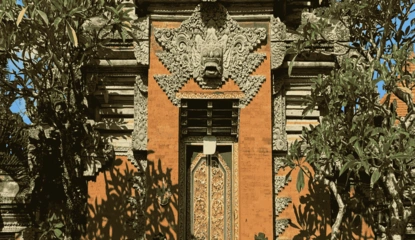
Balinese social and cultural life is also closely connected to Hinduism. Temples can be found throughout the island, serving as communal places of worship or forming part of residential compounds.
The widespread presence of temples is one of the reasons Bali is known as the Island of a Thousand Temples. Various religious traditions and rituals remain an integral part of everyday life.
The Philosophy of Tri Hita Karana
Tri Hita Karana is a Balinese philosophy that emphasizes harmony in three fundamental relationships: between humans and God, among people, and between humans and nature. This philosophy serves as one of the guiding principles of social life and environmental management in Bali.
Its application includes efforts to preserve nature, manage resources responsibly, and encourage community participation in activities such as tree planting, waste management, and the conservation of water sources.
More than a philosophical concept, Tri Hita Karana provides guidance for maintaining harmony between human life, the environment, and spirituality.
Also Read: 11 Must-Visit Temples in Bali and How to Get There
Traditional Balinese Culture
1. Traditional Balinese Houses
Traditional Balinese houses reflect the philosophy of Tri Hita Karana, which emphasizes harmony among people, nature, and God.
A traditional Balinese residential compound consists of several structures with different functions, including the aling-aling, angkul-angkul, bale manten, bale dauh, bale sekapat, klumpu jineng, family temple, bale gede, pewarengan, and rice barn.
2. Traditional Musical Instruments
Traditional Balinese music prominently features various types of gamelan ensembles, including Gong Kebyar, Palegongan, Angklung, Gambang, and Selonding.
In addition to gamelan, Bali has bamboo instruments such as the rindik, jegog, and suling (flute), as well as instruments including the gangsa, gender, reong, terompong, gong, kendang, and ceng-ceng.
3. Traditional Balinese Ceremonies
Traditional ceremonies play an important role in Balinese society and are closely connected to Hindu religious practices.
Some of the most widely recognized ceremonies include Ngaben, a traditional cremation ceremony; Melasti, a purification ritual held before Nyepi; and Galungan and Kuningan, which are associated with honoring ancestors and celebrating the victory of dharma (good) over adharma (evil).
4. Traditional Balinese Dances
Traditional Balinese dances have been passed down through generations and serve various purposes, from religious ceremonies and welcoming rituals to cultural performances.
Well-known dances include the Kecak Dance, Pendet, Barong, Legong, Baris, Trunajaya, Topeng, Janger, Gambuh, and Joged Bumbung. Each dance has its own distinctive movements, musical accompaniment, costumes, and cultural significance.
5. Traditional Balinese Textiles
Traditional Balinese textiles include Endek, Gringsing, Rangrang, Poleng, and Prada. Endek is produced using the ikat weaving technique, Gringsing uses the double-ikat technique, while Rangrang is characterized by symmetrical patterns and vibrant colors.
Poleng features a black-and-white checkered pattern symbolizing balance, while Prada is known for its golden decorative elements. Each textile carries both aesthetic value and cultural significance.
6. Traditional Balinese Attire
Traditional Balinese attire includes Payas Agung, Payas Madya, and Payas Alit. These styles differ in their level of formality and ornamentation, with each worn for different occasions, ranging from traditional ceremonies and weddings to religious activities and everyday life.
Also Read: 4-Day Bali Road Trip Ideas for a Holiday with Friends or Your Partner
Tourist Attractions in Bali
Beaches in Bali
Beaches are among Bali's most popular tourist attractions, with each coastal area offering its own distinctive characteristics. Some of the best-known beaches include:
- Kuta Beach. One of Bali's most iconic beaches, popular for surfing, watching sunsets, and various beach activities.
- Seminyak Beach. Known for its lively coastal area, featuring a wide selection of hotels, restaurants, and entertainment venues.
- Canggu Beach. Characterized by black sand and waves suitable for surfing.
- Jimbaran Beach. Famous for its white sand and beachfront seafood dining options.
- Sanur Beach. Known for its relatively calm waters and as one of Bali's popular spots for watching the sunrise.
- Amed Beach. Offers beautiful underwater scenery ideal for snorkeling and diving.
- Pandawa Beach. A white-sand beach surrounded by limestone cliffs and one of Bali's popular coastal destinations.
- Padang-Padang Beach. Located in South Kuta, this beach features a scenic bay, white sand, and rocky formations.
- Dreamland Beach. Known for its white sand and waves that attract surfers.
- Lovina Beach. Located in North Bali, this beach is well known for dolphin-watching excursions at sea.
Temples in Bali
Temples are an essential part of Balinese cultural and religious life. Several temples are also popular tourist attractions due to their historical significance, architecture, and scenic locations.
- Besakih Temple. The largest temple complex in Bali, located on the slopes of Mount Agung.
- Tanah Lot Temple. A sea temple perched on a rocky outcrop, famous for its spectacular sunset views.
- Uluwatu Temple. A cliffside temple overlooking the Indian Ocean and a popular venue for Kecak Dance performances.
- Ulun Danu Beratan Temple. A temple situated by Lake Beratan in Bedugul, surrounded by mountainous scenery.
- Tirta Empul Temple. Located in Tampaksiring, this temple is known for its sacred spring and the traditional melukat purification ritual.
- Lempuyang Temple. A temple complex in Karangasem, famous for its iconic gateway with Mount Agung in the background.
Natural Attractions in Bali
Beyond its beaches and temples, Bali offers a wide variety of natural attractions, including mountains, lakes, forests, and rice terraces. Popular destinations include:
- Penglipuran Traditional Village. A traditional Balinese village known for its well-preserved layout, architecture, and surroundings.
- Lake Buyan. A highland lake in Buleleng, offering cool mountain air and camping areas.
- Jatiluwih. An expansive area of terraced rice fields representing one of Bali's distinctive natural and cultural landscapes.
- Nusa Penida. An island featuring beautiful beaches, dramatic cliffs, and panoramic ocean views.
- Sangeh Monkey Forest. A forest sanctuary inhabited by monkeys and home to several religious sites.
- Bali Botanic Garden. A botanical conservation area in Bedugul featuring diverse plant collections and a scenic mountain setting.
To make it easier to choose destinations, discover activities, and find useful travel tips while exploring Bali, the MaiA feature is available as a travel assistant.
Traditional Balinese Cuisine
- Ayam Betutu. Chicken cooked with a rich blend of traditional Balinese spices known as betutu seasoning.
- Sate Lilit. Minced chicken or fish mixed with grated coconut and spices, then wrapped around bamboo sticks or lemongrass stalks.
- Nasi Jinggo. A small portion of rice wrapped in banana leaves, typically served with side dishes, noodles, and sambal.
- Nasi Campur Bali. Rice served with a variety of side dishes, such as sate lilit, shredded chicken, seasoned vegetables (urap), and sambal matah.
- Nasi Tepeng. A soft, porridge-like rice dish typically served with chicken, eggs, eggplant, and beans.
- Sate Plecing. Satay served with a spicy plecing sauce made from chilies, tomatoes, candlenuts, shrimp paste, and other spices.
- Bebek Betutu. Duck slow-cooked with traditional Balinese betutu spices for a rich and aromatic flavor.
- Nasi Lawar. A rice dish accompanied by a traditional Balinese mixture of seasoned vegetables and meat.
- Jukut Ares. A savory and spicy soup made with banana stems and a richly seasoned broth.
- Tipat Cantok. Rice cakes and vegetables tossed in a traditional Balinese peanut sauce.
Traditional Souvenirs from Bali
- Bali Milk Pie (Pie Susu Bali)
- Balinese Pia Pastries
- Balinese Disco Peanuts
- Kintamani Coffee
- Loloh Cemcem Herbal Drink
- Barong Shirts
- Joger Bali T-Shirts
- Balinese Kebaya
- Beach Sarongs
- Balinese Batik Fabrics
- Balinese Woven Handicrafts
- Carved Masks
- Wood Carvings
- Balinese Paintings
Bali offers a diverse combination of natural attractions, cultural heritage, traditional cuisine, and local customs that suit different travel preferences. The island is an ideal destination for family vacations, romantic getaways, trips with friends, and solo adventures.
For a more personalized itinerary while traveling in Bali, use the Plan Your Trip feature on Indonesia Travel to create a travel plan tailored to your schedule, interests, budget, and preferences.