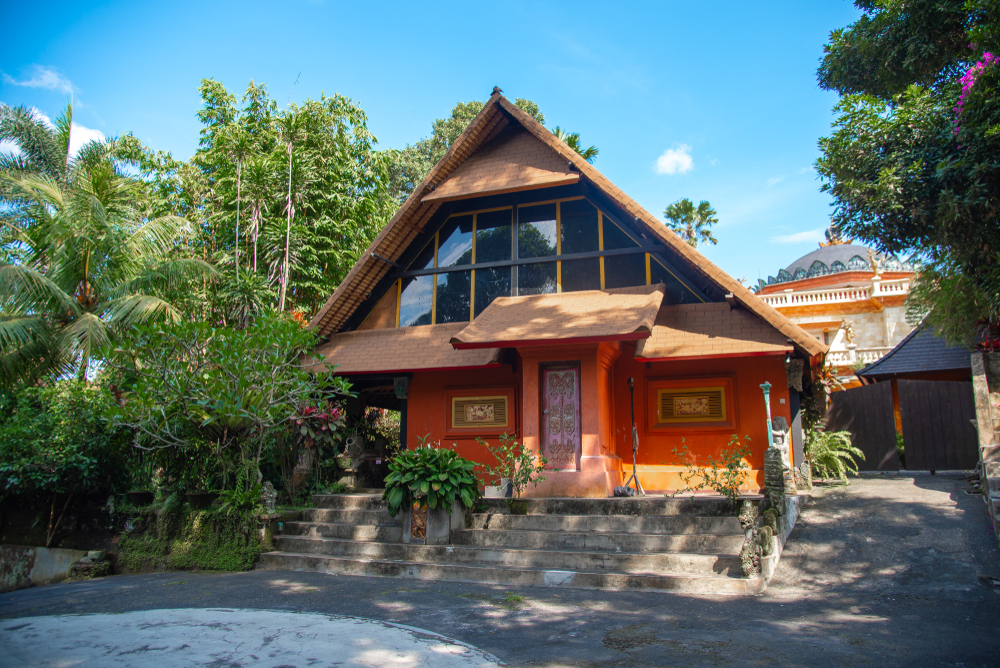





Museum Sarkofagus is a specialized museum in Gianyar Regency, Bali, dedicated to preserving and interpreting prehistoric cultural heritage, particularly stone sarcophagi. The museum serves as an important educational space that connects archaeology, history, and public learning, strengthening the understanding of Bali’s ancient civilizations.
As part of Indonesia’s national museum system, Museum Sarkofagus plays a strategic role in safeguarding archaeological remains while making cultural heritage accessible to the public. The museum is officially registered under National Museum Registration Number (NPNM) 51.04.K.01.0331.
History of Museum Sarkofagus
The history of Museum Sarkofagus is closely linked to the establishment of the Cultural Heritage Preservation Center Region XV. Formerly known as Museum Gedong Arca or the Archaeological Museum, it originated from the ideas of Professor R. P. Soejono and Soekarto Atmojo, former Head of the Bali Antiquities Office.
The museum was officially founded on 14 September 1974, aiming to introduce cultural heritage objects collected since the establishment of the Antiquities Office in 1950. Between 2016 and 2018, the museum underwent major rehabilitation funded by the national budget.
It was re-inaugurated on 20 March 2019, and due to the uniqueness and abundance of sarcophagus remains, the museum was officially activated and renamed Museum Sarkofagus by the Minister of Culture on 27 February 2025.
Museum Sarkofagus is a specialized museum focusing on sarcophagi and related archaeological artifacts from prehistoric to Hindu–Buddhist periods in Bali. Sarcophagi are stone burial containers that reflect ancient belief systems, social structures, and technological development.
The museum is owned by the Ministry of Culture of the Republic of Indonesia and managed by the Cultural Heritage Preservation Center (Balai Pelestarian Kebudayaan) Region XV.
Museum Type and Classification
Museum Sarkofagus is classified as a Specialized Museum due to its thematic focus. Regarding museum typology, it has not yet been formally standardized within Indonesia’s national museum classification system.
Museum Collection
Currently, Museum Sarkofagus does not yet have an officially published or recorded collection inventory. Nevertheless, the museum is designed to function as a preservation and interpretation center for sarcophagi and other archaeological remains related to Bali’s prehistoric and Hindu–Buddhist heritage.
Vision and Mission of Museum Sarkofagus
The vision of Museum Sarkofagus is to become a center of cultural heritage information and public education through museum-based utilization of cultural heritage.
Its missions include preserving historical objects, enhancing public education, providing engaging educational services, improving human resources, and contributing to cultural preservation and sustainable cultural tourism in Bali.
Museum Sarkofagus stands as an important institution for preserving Indonesia’s prehistoric heritage. Beyond conservation, the museum serves as a platform for education and cultural awareness.
Through professional management and an educational approach, Museum Sarkofagus is expected to become a key reference for archaeological studies in Bali and an inspiring learning space for future generations.